
A homeowner’s guide to understanding mold remediation services, indoor air quality, and what actually makes a lasting difference
Why This Conversation Has Changed
For years, mold remediation was framed as a simple problem with a simple solution:
Find the mold. Kill the mold. Move on.
But that model is starting to feel… incomplete.
Because homeowners across the United States are noticing something that doesn’t quite add up:
The mold is “gone,” but the home still doesn’t feel right
Symptoms or sensitivities don’t fully improve
Issues return months later, often in the same or nearby areas
And naturally, that leads to a bigger question:
Was the problem ever fully solved or just partially addressed?
This is where the concept of clinical health-focused home remediation has taken shape. Not as a trend, but as a response to a gap in how homes have traditionally been evaluated and treated.
In 2026, the conversation is shifting from:
👉 “Did we kill the mold?”
to
👉 “Did we restore a healthy indoor environment?”
That distinction changes everything.
What Most Mold Remediation Services Still Focus On
To understand what makes a health-focused approach different, it helps to look at what standard mold remediation services are typically designed to do.
Most follow a similar structure:
Identify visible mold growth
Isolate the affected area
Remove contaminated materials
Clean remaining surfaces
Run air filtration during the process
Complete a final clearance test
This approach can absolutely be effective in certain situations, especially when the issue is isolated and straightforward.
But homes are rarely that simple.
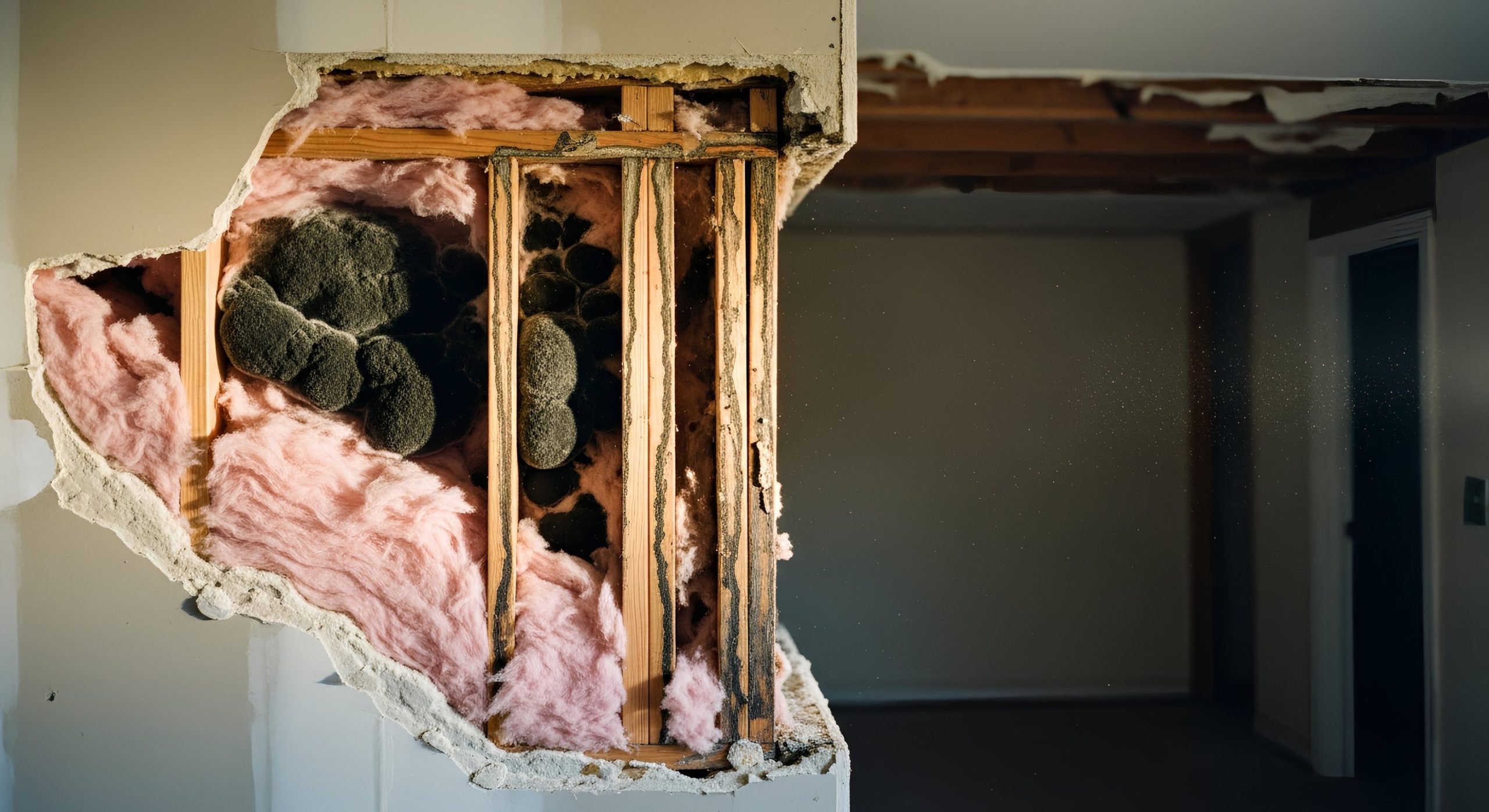
What often gets missed is that mold is not just a surface-level issue. It’s part of a larger environmental dynamic that includes:
Airflow patterns
Humidity and moisture behavior
Dust and particle movement
Hidden cavities and interconnected spaces
So when remediation is limited to what’s visible or easily accessible, it can leave behind the very conditions that allowed the issue to develop in the first place.
And that’s where the difference begins.
What “Health-Focused” Really Means in 2026
A health-focused mold remediation in 2026 approach is built on a different premise:
The goal is not just to remove contamination. The goal is to restore environmental balance.
That means looking at the home as a living system, where:
Air circulates continuously
Particles move and settle, then become airborne again
Moisture conditions fluctuate based on daily life
Instead of asking, “Where is the mold?”
The better question becomes:
👉 “How is this home functioning as an environment?”
From there, every step of the process shifts.

1. Inspection and Testing That Actually Reflects the Whole Home
Everything starts with mold inspection and testing, but not all inspections are created equal.
A limited inspection might provide a snapshot. A comprehensive inspection tells a story.
Why This Matters
Think of a home like a map.
If you only look at one room, you might miss how everything connects.
For example:
A moisture issue in the attic can impact air quality throughout the home
A crawlspace problem can influence humidity levels on upper floors
HVAC systems can distribute particles far beyond the original source
So a health-focused inspection is designed to understand movement, not just location.
What Comprehensive Inspection Often Includes
Moisture mapping: Identifying where water is present or has been present
Humidity analysis: Understanding how the home behaves over time
Thermal imaging: Detecting hidden temperature differences that suggest moisture
Dust sampling: Evaluating what has been circulating in the air over time
Targeted air and surface sampling: Based on how the home is used and lived in
Combined with visual assessments and detailed notes, this process should take hours and span the entire house.
This type of approach allows certified mold remediation companies to build a plan based on the entire environment, not just isolated findings.
2. Indoor Air Quality Is Treated as the Centerpiece, Not an Afterthought
Most people think of mold as something that “sits” on surfaces.
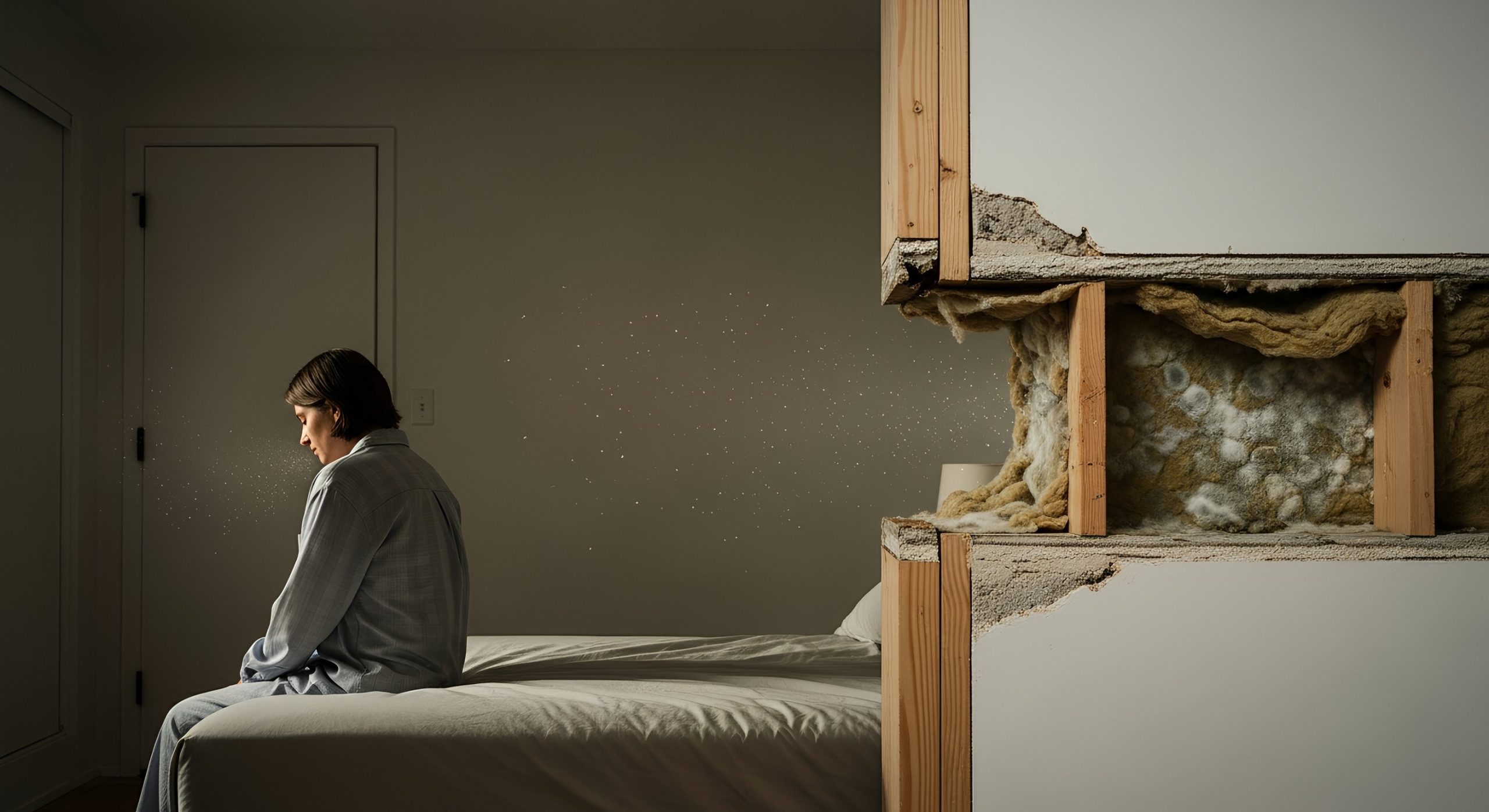
But in reality, homes are dynamic environments where particles are constantly moving.
This is where indoor air quality becomes central to the conversation.
The Invisible Layer Most People Don’t See
Every day, normal activity causes particles to:
Lift into the air
Travel through airflow pathways
Settle into dust reservoirs
Become airborne again
This includes:
Fine particulate matter (PM2.5 and smaller)
Dust carrying biological and environmental contaminants
Microscopic fragments that are easily redistributed
So even if a surface looks clean, the environment may still be active.
What Health-Focused Remediation Does Differently
Instead of treating air as temporary support, it becomes a core focus:
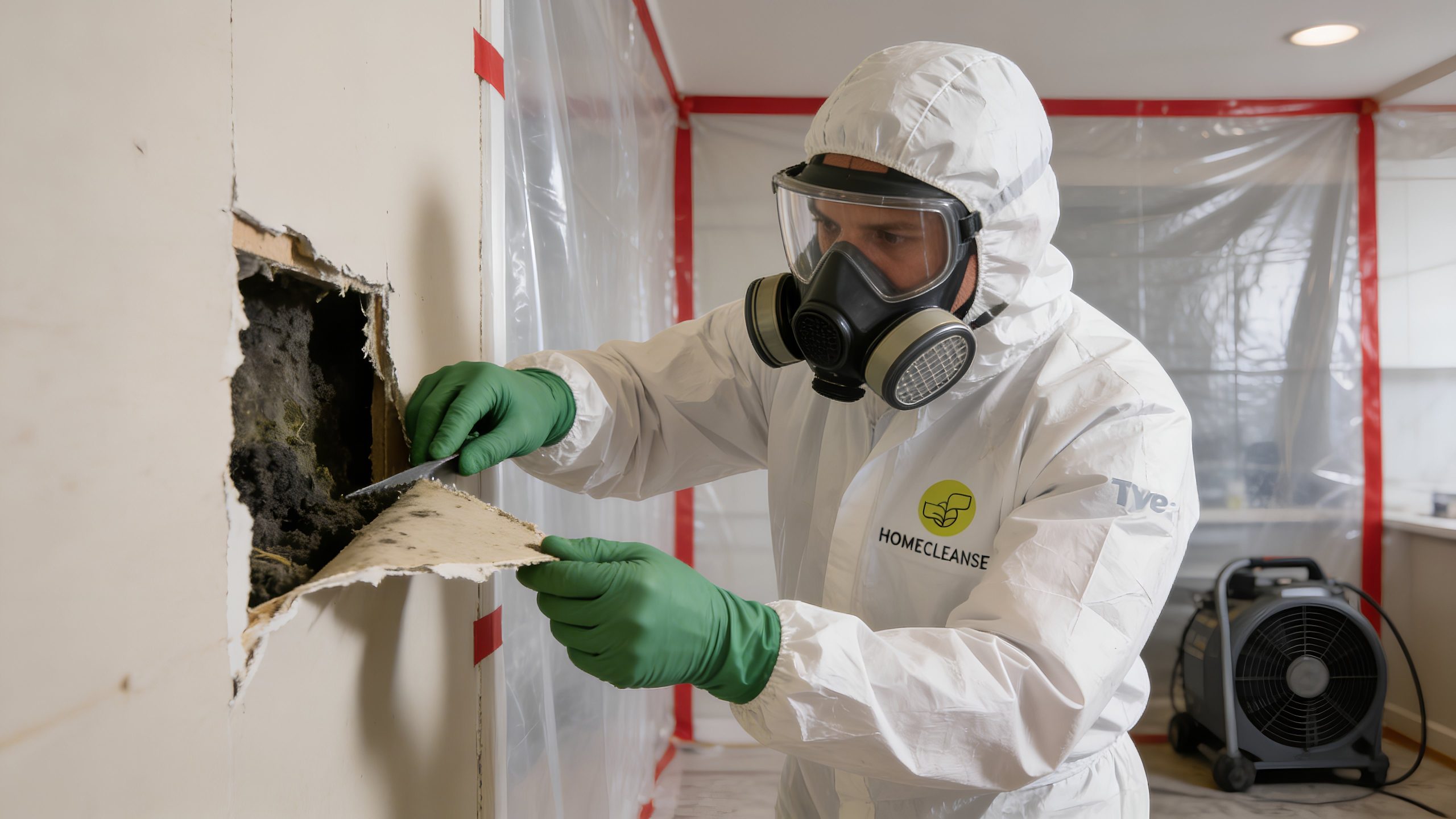
Establishing proper containment with negative air pressure
Using high-efficiency filtration designed for ultrafine particles
Considering the entire home’s air movement, including HVAC systems
Reducing the overall particle load, not just in one area
Because improving indoor air quality isn’t a bonus outcome.
👉 It’s one of the primary goals.
3. The Shift From “Killing” to Physically Removing Contamination
One of the most misunderstood aspects of mold removal is the idea that eliminating growth is the same as eliminating impact.
But in many cases, the issue isn’t just the presence of mold itself. It’s the particles and residues left behind.
Why This Matters
Contaminants can:
Embed in porous materials
Settle into dust layers
Spread beyond the original source area
Reactivate under the right conditions
So a surface-level treatment does not fully resolve the issue. Not to mention, mycotoxins can adhere to surfaces and require multiple cleaning cycles to remove.
What Health-Focused Cleaning Looks Like
A more comprehensive approach emphasizes physical removal, including:
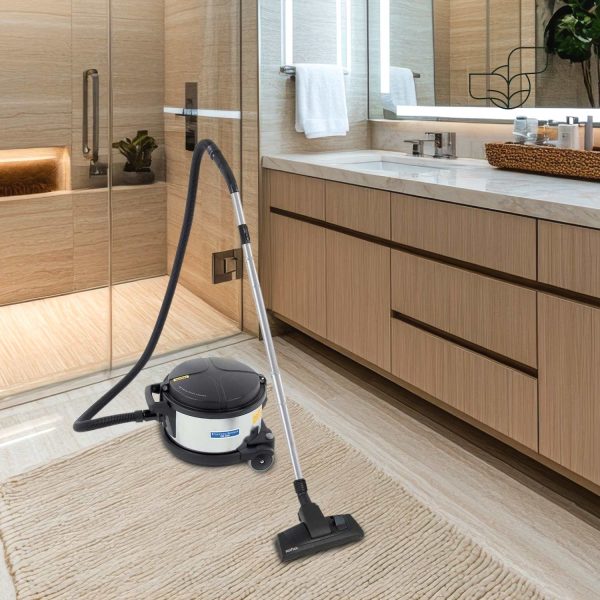
HEPA vacuuming across all affected and adjacent areas
Mechanical cleaning methods like brushing or agitation where appropriate
Multiple cleaning passes to reduce residual particles
Removal of materials that cannot be effectively restored
This process is often more detailed and time-intensive, but it directly addresses the goal of reducing what remains in the environment.
4. Addressing the Conditions That Allowed Mold to Grow
Mold is often treated as the problem.
But in reality, it’s more like a signal.
Something in the environment made growth possible:
Persistent moisture
Elevated humidity
Limited airflow
Condensation or hidden leaks
If those conditions remain, the environment hasn’t truly changed.
The Environmental Lens
Health-focused remediation looks beyond the immediate issue and asks:
👉 What allowed this to happen?
From there, solutions may include:
Identifying and correcting moisture sources
Improving ventilation or airflow
Stabilizing indoor humidity levels
Evaluating how different parts of the home interact
This is what separates short-term fixes from long-term outcomes.
5. Accountability, Verification, and Long-Term Confidence
One of the biggest differences in 2026 is the expectation of accountability.
As homeowners, we should no longer be satisfied with “it should be fine.”
We should understand:
What was done
Why it was done
How success is defined
What This Can Look Like
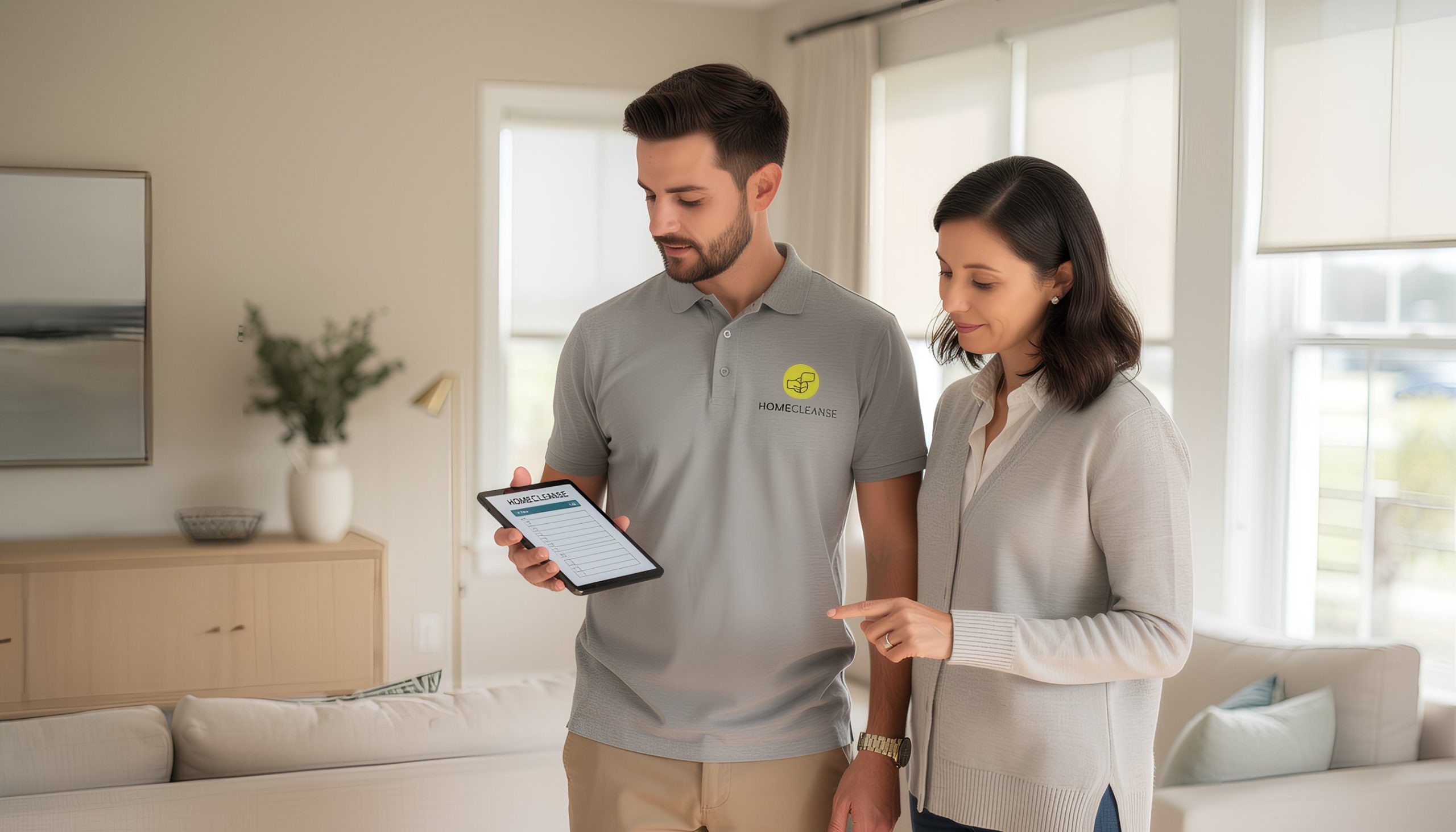
Clear documentation of the remediation process
Defined scope that reflects the full environment
Post-remediation verification
Transparent communication throughout the project
We at HomeCleanse are also introducing:
Outcome-based guarantees
Long-term warranties
Continued support after the project is complete
Because when the goal is health, confidence matters just as much as completion.

How to Compare Mold Remediation Services (Checklist)
If you’re evaluating different providers, these questions can help you identify whether you’re looking at a standard service or a health-focused approach.
Inspection and Testing
How do you determine the full scope of the issue?
Do you evaluate moisture, airflow, and environmental patterns?
Is the inspection designed to assess the entire home?
Indoor Air Quality
How is air movement controlled during remediation?
What type of filtration is used?
Is the HVAC system considered in the process?
Cleaning and Removal
What methods are used to physically remove contamination?
How many cleaning passes are typical?
How do you address adjacent or connected areas?
Environmental Correction
How are moisture sources identified and resolved?
What steps are taken to prevent recurrence?
Accountability
How is success measured?
Is documentation provided?
Are there guarantees or warranties tied to outcomes?
The Bigger Picture: Why This Matters More Than Ever
Homes today are more sealed, more energy-efficient, and more complex than ever before.
That brings benefits, but it also means:
Less natural ventilation
Greater reliance on HVAC systems
More opportunities for indoor conditions to influence overall air quality
So when something shifts in the environment, the impact can be more noticeable and more persistent.
That’s why mold remediation services in 2026 are evolving– or at least, they are in companies that prioritize client wellness.
Not just to remove problems, but to ensure the home supports the well-being of those living inside.

Final Thoughts
If you take one thing away from this, let it be this:
Mold remediation is not just about what you remove. It’s about what you restore.
Because at the end of the day, this isn’t just about a project.
It’s about:
- How your home feels when you walk in
- The air you breathe without thinking about it
- The confidence that your environment is working with you, not against you
Do You Have More Questions
A member of our team is here to help! Click on “Get Started ➤” below to book a free consultation with a member of the HOMECLEANSE team. We have a few quick questions that will help us put together a roadmap to solve or prevent all of your mold problems.
Two minutes of your time could lead to better health for you and your family.
Must-Have Indoor Air Quality Tools
-

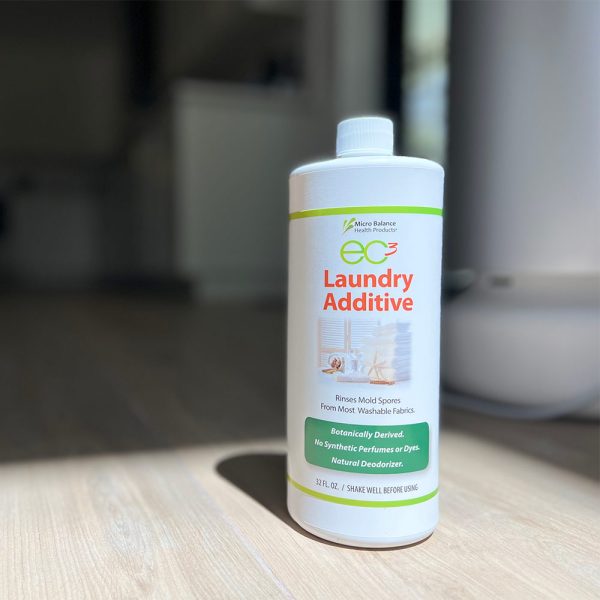
EC3 Laundry Additive
Add EC3 to every rinse cycle to rinse away mold, bacteria and musty odors from...
-
$23.00 Shop Now -

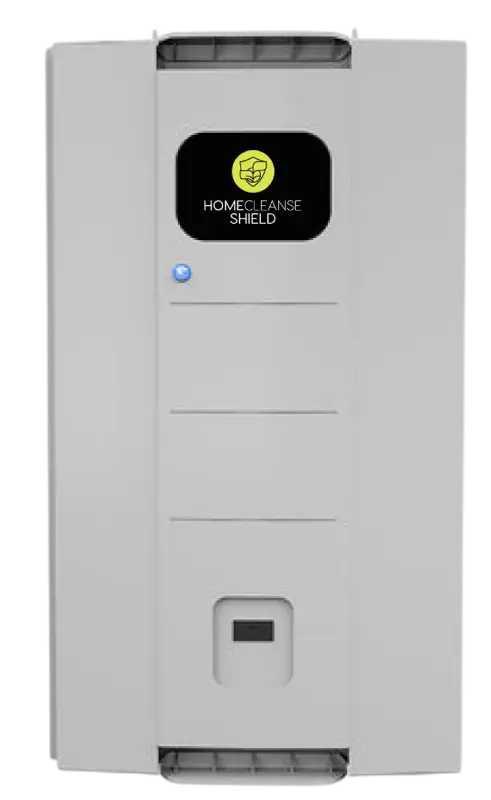
HomeCleanse Shield
Turn your HVAC into the healthiest feature of your home.
-
$2,495.00 Shop Now -
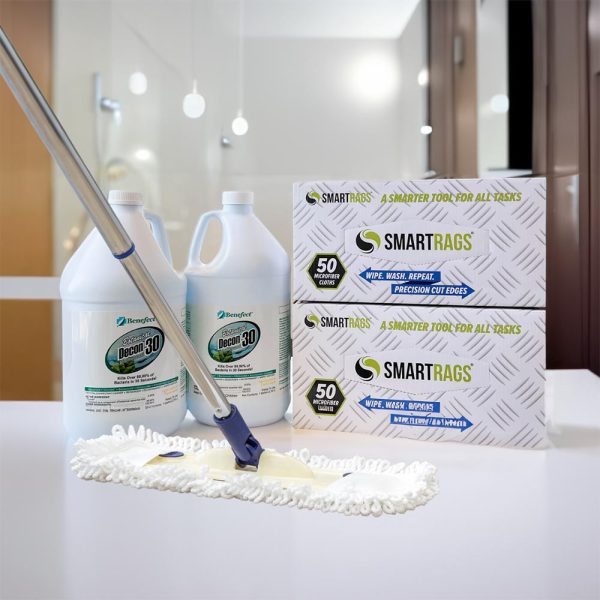
HomeCleanse Cleaning
Take your cleaning to the next level buying all the tools we use to keep...
-
Price range: $299.00 through $549.00 Shop Now -
Mold & Bacteria Contents Cleaning
Remove harmful pollutants that accumulate in the dust of your home. (Options available for renters...
-
Price range: $99.00 through $349.00 Shop Now -

EC3 Mold Solution Concentrate
Micro Balance EC3 Mold Solution Concentrate is a natural botanical that removes mold spores, bacteria,...
-
$33.00 Shop Now -

The Dust Test
Optimizing Air Quality starts with finding what’s not optimal. *Detects 36 different species of mold...
-
$299.00 Shop Now -
EuroClean 4 Gallon Hepa Vacuum
The Euroclean GD930HSP is a 4 Gallon Dry HEPA Vacuum that meets the EPA's standards...
-
$849.00 Shop Now