You walk into a room and completely forget why you went there. You read the same paragraph three times, but somehow none of it sticks. You’re halfway through a sentence when a word you use all the time suddenly vanishes.
Or maybe nothing feels dramatically wrong. You’re still working, making dinner, answering texts, and getting through the day. It just feels like your brain is moving through mud. Thinking takes more effort. Focusing is harder. You don’t feel quite as sharp as you normally do.
People often call this brain fog.
Brain fog isn’t a formal medical diagnosis. It’s a general term people use to describe changes in thinking, memory, focus, and mental energy.
And there are many things that can cause it.
But if brain fog is happening alongside a known or suspected moisture or mold problem in your home, it’s reasonable to wonder:
Could the two be connected?
The answer is more complicated than a simple yes or no. But researchers have found enough interesting pieces of the puzzle that the question is worth exploring.

Can Mold Exposure Cause Brain Fog?
Here’s the short version:
Researchers have found associations between damp or mold-affected buildings and cognitive complaints such as brain fog, difficulty concentrating, and memory problems. But we do not yet have enough research to fully understand the mechanisms behind the reaction.
Some studies involving people who lived or worked in mold-affected environments have documented cognitive symptoms or differences on certain brain-function tests.
Animal research has also given scientists clues about how exposure to fungal material could potentially affect the brain, including through immune activation and inflammation.
But human studies have limitations. Results aren’t completely consistent. Actual mold exposure is notoriously difficult to measure. And perhaps most importantly, brain fog can have a long list of other causes.
So we’re not starting with:
“I have brain fog, therefore mold caused it.”
We’re starting with:
“I have brain fog. There may also be a problem in my environment. Both are worth investigating.”
That’s a much more useful place to begin.
What Does Brain Fog Actually Feel Like?
Brain fog can be surprisingly difficult to explain because it doesn’t look exactly the same for everyone.
Maybe you open your laptop to do something and, 30 seconds later, can’t remember what you were about to do.
Maybe someone gives you three instructions and you only remember the first one.
Maybe conversations move faster than your brain seems able to follow.
Maybe you know the word you’re trying to say, but your brain simply refuses to hand it over.
Or you may just feel mentally exhausted after tasks that used to be easy.
Brain fog can include things like:
Difficulty concentrating
Forgetfulness or short-term memory problems
Trouble finding words
Slower thinking
Difficulty processing information
Trouble following conversations
Mental fatigue
Difficulty staying focused on a task
Feeling mentally cloudy or less sharp than usual
Here’s the important part:
None of these symptoms are specific to just mold.
Sleep problems can cause them. So can stress, medications, hormonal changes, nutritional deficiencies, infections, mental health conditions, metabolic or endocrine disorders, and many other medical issues.
Brain fog tells you that something may be affecting how you feel or function.
It doesn’t tell you what that something is.

What Does the Research Say About Mold and Brain Fog?
Research into mold exposure and cognitive symptoms is still developing. While respiratory and immune effects from damp and mold-affected buildings are better established, researchers have also found some compelling clues about how these environments may affect the brain.
Brain Fog Has Been Reported in Mold-Affected Buildings
One study compared employees working in a moisture- and mold-damaged hospital with employees in a control group.
Among workers in the affected building, 62% reported brain fog.
In the control group? 11%.
Fatigue and other neurological symptoms were also reported more frequently among employees working in the affected environment.
That doesn’t tell researchers exactly which exposure caused those symptoms or the biological mechanism behind them. But the difference is significant enough to warrant attention, especially alongside other research into cognitive effects.
Researchers Have Also Measured Cognitive Performance
Scientists haven’t only relied on people describing how they feel.
Some studies have used neuropsychological testing to measure memory, attention, processing speed, learning, and other aspects of cognitive function.
A 2002 study involving patients with reported indoor mold exposure found poorer performance in areas including:
- Visuospatial learning and memory
- Verbal learning
- Psychomotor speed
Other research has reported differences involving memory, reaction time, attention, and additional cognitive functions.
These studies have limitations. Some involve relatively small groups, exposure levels can be difficult to quantify, and mold may not be the only contaminant present in a water-damaged building. More research is needed to understand exactly what is happening and why.
But “we need more research” does not mean “there is no relationship.”
People exposed to mold-affected environments have reported cognitive symptoms, researchers have documented measurable differences in some exposed groups, and scientists continue to investigate the biological mechanisms that could help explain them.
The science may not have every piece of the puzzle yet. That’s a reason to keep investigating the connection, not a reason to dismiss it.
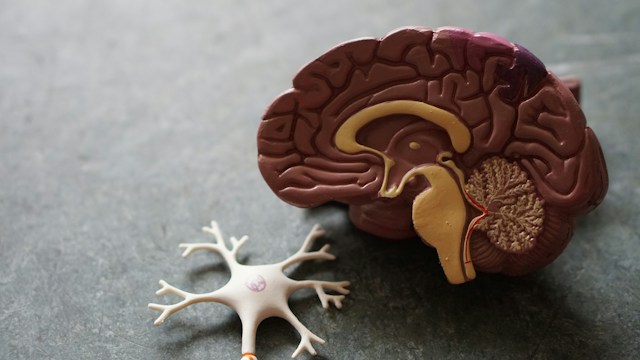
How Could Mold Exposure Affect the Brain?
If mold exposure contributes to brain fog for some people, what could actually be happening inside the body?
One possibility researchers are exploring involves the immune system and inflammation.
Your Immune System and Brain Talk to Each Other
When mold grows, it can release much more into the environment than the fuzzy patch you can see.
Depending on the conditions, the surrounding environment may contain mold spores, microscopic fungal fragments, and other microbial materials. When some of these materials enter the body, they can interact with the immune system and trigger an immune response.
And your immune system and brain are constantly communicating.
Think about the last time you had the flu or another nasty virus. You probably didn’t just feel congested. You may have felt exhausted, unfocused, slow, or mentally checked out.
That’s partly because immune activity elsewhere in the body can influence how the brain functions and how you feel.
So researchers are exploring an important question:
Could immune activation following mold exposure contribute to cognitive symptoms like brain fog?
Animal research offers an interesting clue.
A Mouse Study Found Changes in the Brain
In a controlled study, researchers exposed mice to measured amounts of Stachybotrys mold stimuli.
They observed immune activation in the hippocampus, a region of the brain involved in learning and memory. Some exposed mice also experienced decreased neurogenesis, meaning the formation of new neurons, along with changes in memory performance.
Interestingly, researchers observed some effects with both toxin-producing and non-toxin-producing mold stimuli. That raises the possibility that the immune response to fungal material itself may matter, not only exposure to mold toxins.
Of course, animal research cannot tell us exactly what happens in a person living or working in a mold-affected building. But that isn’t what these studies are designed to do.
They help researchers identify biologically plausible mechanisms that may explain what has been observed in people and point toward what needs to be studied next.

What About Mycotoxins and Brain Fog?
This is where the conversation gets even more complex.
Certain molds can produce substances called mycotoxins under particular environmental conditions. We know that some mycotoxins can be harmful to the body, and laboratory and animal research has shown effects involving cells, immune activity, inflammation, and other biological processes.
Researchers are still working to understand what those findings mean for people exposed to mycotoxins in water-damaged indoor environments.
One of the biggest challenges is measuring real-world exposure. Dose, duration, exposure route, and the specific mycotoxin all matter. And unlike a controlled laboratory experiment, a water-damaged building can contain a complicated mixture of mold spores, fragments, mycotoxins, bacteria, and other microbial materials.
A 2023 clinical guideline concluded that current evidence is not strong enough to establish indoor mold exposure as a cause of neuropsychological or neurotoxic effects.
But importantly, the guideline also stated that an association cannot currently be ruled out.
That distinction matters.
We know mycotoxins are biologically active substances capable of affecting the body. What researchers haven’t fully established is how indoor exposure may affect the brain at the concentrations and exposure patterns people experience in real buildings.
So the science isn’t telling us there’s no connection.
It’s telling us there is still more to understand.

Why Is This So Hard to Study?
Because your house is not a laboratory.
Imagine researchers wanted to study one substance.
In a lab, they could control exactly what that substance was, how much someone encountered, how long exposure lasted, and nearly everything else happening in the environment.
A water-damaged home is nothing like that.
You may have mold spores and microscopic fungal fragments. There may also be bacteria, allergens, dust, microbial compounds, and other particles.
The amount in the air can change from one room to another.
It can change when the HVAC turns on.
It can change when someone opens a wall.
It can change as materials become wetter or drier.
Then add humans to the equation.
One person spends eight hours a day in the building. Another spends nearly 24. One person has asthma. Another has allergies. Another has neither. One person slept nine hours last night. Someone else has a newborn and hasn’t slept properly in six months.
Medications, infections, hormones, stress, nutrition, medical history, and countless other factors can influence cognition.
Now try to isolate one thing and confidently say:
“This exposure caused this symptom.”
You can see why researchers have their work cut out for them.
It’s also why conversations about mold and health need room for nuance.

What Should You Do If You Have Brain Fog and Suspect Mold?
When your brain already feels foggy, the last thing you need is an overwhelming list of things to figure out.
So keep it simple. Take it one step at a time.
Step 1: Talk to a Healthcare Professional
Brain fog can have many potential causes, so start by talking with a qualified healthcare provider about what you’re experiencing.
Tell them about your symptoms, when they started, anything that seems to make them better or worse, and any concerns you have about your environment. Looking at your health and your home together can help you build a clearer picture of what may be going on.
If you experience sudden confusion or cognitive changes, particularly with weakness, difficulty speaking, severe headache, or other sudden neurological symptoms, seek urgent medical care.
Step 2: Screen Your Home
Next, find out whether there are signs of a mold problem in your environment.
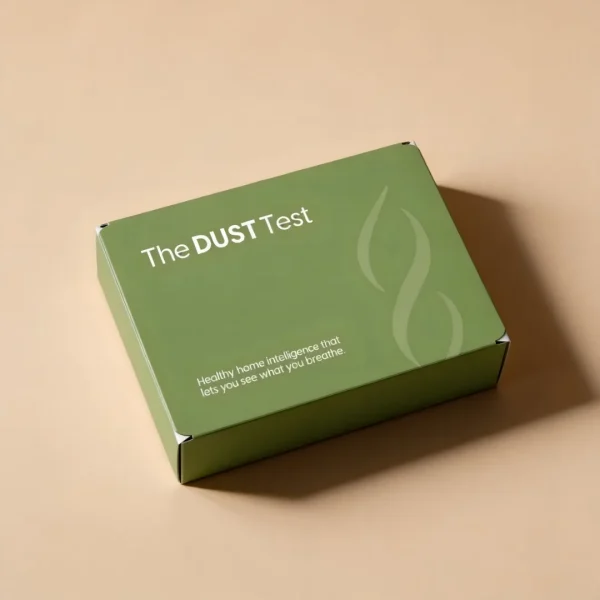
The Dust Test + MycoTOX Combo Kit can help you screen your home for both mold and mycotoxins using dust collected from your environment.
This gives you actual data to work with instead of relying only on visible mold, musty odors, or guessing what might be hiding somewhere you can’t see.
-

MycoTOX Profile® & The Dust Test
An at-home dust mold screening kit paired with the MycoTOX Profile® to help detect hidden...
-
$564.00 Shop Now -

MycoTOX Profile® Mold Exposure Test
Mycotoxins created by certain mold species are among the most common environmental toxins found in...
-
$342.00 Shop Now -

The Dust Test
Optimizing Air Quality starts with finding what’s not optimal. *Detects 36 different species of mold...
-
$299.00 Shop Now


Step 3: If Your Results Raise Concerns, Bring in an Inspector
If your screening results indicate a potential problem, the next step is a comprehensive inspection.
A qualified indoor environmental professional can investigate why those results are elevated and where the contamination may be coming from. That means looking for moisture sources, hidden water damage, mold growth, HVAC involvement, and other conditions that could be contributing to the problem.
Testing tells you there may be a problem. The inspection helps you find it.
Step 4: If a Problem Is Found, Remediate It
If the inspection confirms mold growth or water damage, it’s time to address the source and contamination.
That means correcting the moisture problem, removing contaminated materials that cannot be salvaged, and thoroughly cleaning the environment to physically remove spores, fragments, and other settled particles.
The goal isn’t simply to kill mold or make visible growth disappear. It’s to remove the contamination and return the home to a clean, dry condition.
You may not be able to answer every question about your brain fog immediately. But you can start gathering information about your health and your environment, then follow the evidence from there.

Can Brain Fog Improve After Leaving a Moldy Environment?
Some people report feeling better when they spend time away from a particular building or after an indoor environmental problem is addressed.
Maybe you notice that your head feels clearer after a few days away.
Or symptoms seem worse during the workweek and better when you’re away from the office.
That’s useful information.
Write it down.
Share it with your healthcare provider and, when relevant, the professionals investigating the building.
Just remember that symptom improvement alone can’t prove what caused the symptom.
At this point, we don’t have enough high-quality research to say how quickly cognitive symptoms should improve after mold exposure ends, or whether fixing a mold problem will resolve brain fog for a particular person.
If cognitive symptoms continue after an environmental problem has been addressed, keep investigating your health with your healthcare provider.
So, Is There a Connection Between Mold Exposure and Brain Fog?
Research suggests there may be a connection between mold exposure and cognitive symptoms like brain fog, memory problems, difficulty concentrating, and fatigue. While science has not yet established exactly how indoor mold exposure may affect the brain, that uncertainty doesn’t mean the connection should be dismissed. Many of our clients have suffered cognitively from exposures in their home.
Mold exposure is complex, and it can affect the body in many ways, some of which we may not fully understand yet.
So if something feels off, trust your gut enough to investigate it.
Brain fog can have many causes, so talk with your healthcare provider. But if your symptoms coincide with water damage, musty odors, visible growth, or another sign of a potential mold problem, investigate your environment, too.
Pay attention to the patterns. Get your home checked. Get yourself checked. Find out what’s actually going on.
Have Questions?
A member of our team is here to help! Click on “Get Started ➤” below to book a consultation with a member of the HOMECLEANSE team. We have a few quick questions that will help us put together a roadmap to solve or prevent all of your mold problems.
Two minutes of your time could lead to better health for you and your family.

Frequently Asked Questions
Can mold cause brain fog and fatigue?
Brain fog and fatigue have been reported by people living or working in damp or mold-affected buildings, and some studies have found these complaints more often among exposed groups.
However, both symptoms can have many causes. Current research has not established that indoor mold exposure causes brain fog or fatigue in every person who experiences them.
What does brain fog from mold feel like?
There isn’t a medically recognized type of brain fog that is specific to mold exposure.
People concerned about mold exposure may describe forgetfulness, difficulty concentrating, slower thinking, mental fatigue, trouble finding words, or simply feeling less mentally sharp than usual.
The problem is that all of these symptoms can occur for many other reasons too. The symptom alone can’t tell you its cause.
Can mold exposure cause memory problems?
Some studies involving mold-exposed groups have found poorer performance on certain memory and neuropsychological tests.
However, the overall evidence remains limited, and problems with study design and exposure measurement make it difficult to determine whether mold itself caused those differences.
Can mycotoxins affect the brain?
Certain mycotoxins can have toxic effects at sufficient doses, and laboratory research has identified ways some mycotoxins may affect cells, immune activity, or the nervous system.
But dose and exposure matter.
Current evidence has not established that the concentrations of airborne mycotoxins typically encountered in mold-affected indoor environments cause brain fog or neurotoxicity in humans.
How do I know if my brain fog is caused by mold?
Brain fog alone can’t tell you whether mold is involved.
Think of this as two investigations.
For your health, talk with a healthcare professional about persistent or concerning cognitive symptoms and other possible causes.
For your home, look for actual signs of an environmental problem, such as leaks, flooding, visible growth, musty odors, persistent humidity, condensation, or water-damaged materials.
You don’t need to decide which one holds the answer before investigating either one.
Should I test my home if I’m experiencing brain fog?
Brain fog by itself isn’t evidence that your home has a mold problem.
But if you’re experiencing brain fog and have legitimate reasons to suspect moisture or mold, environmental testing or an inspection may help you better understand what’s happening in the building.
Remember: testing your home answers questions about your home. It doesn’t diagnose the cause of a medical symptom.
References:
World Health Organization. WHO Guidelines for Indoor Air Quality: Dampness and Mould. 2009.
Hyvönen S, Lohi J, Tuuminen T. Moist and Mold Exposure is Associated With High Prevalence of Neurological Symptoms and MCS in a Finnish Hospital Workers Cohort. 2020.
Baldo JV, Ahmad L, Ruff R. Neuropsychological Performance of Patients Following Mold Exposure. Applied Neuropsychology. 2002.
Kilburn KH. Neurobehavioral and Pulmonary Impairment in 105 Adults With Indoor Exposure to Molds Compared to 100 Exposed to Chemicals. Toxicology and Industrial Health. 2009.
Harding CF, Pytte CL, Page KG, et al. Mold Inhalation Causes Innate Immune Activation, Neural, Cognitive and Emotional Dysfunction. Brain, Behavior, and Immunity. 2020.
Hurraß J, et al. AWMF Mold Guideline “Medical Clinical Diagnostics for Indoor Mold Exposure” – Update 2023. 2023.
Must-Have Indoor Air Quality Tools
-
EC3 Laundry Additive
Add EC3 to every rinse cycle to rinse away mold, bacteria and musty odors from...
-
$23.00 Shop Now -
HomeCleanse Shield
Turn your HVAC into the healthiest feature of your home.
-
$2,495.00 Shop Now -
HomeCleanse Cleaning
Take your cleaning to the next level buying all the tools we use to keep...
-
Price range: $299.00 through $549.00 Shop Now -
Mold & Bacteria Contents Cleaning
Remove harmful pollutants that accumulate in the dust of your home. (Options available for renters...
-
Price range: $99.00 through $349.00 Shop Now -
EC3 Mold Solution Concentrate
Micro Balance EC3 Mold Solution Concentrate is a natural botanical that removes mold spores, bacteria,...
-
$33.00 Shop Now -
The Dust Test
Optimizing Air Quality starts with finding what’s not optimal. *Detects 36 different species of mold...
-
$299.00 Shop Now -
EuroClean 4 Gallon Hepa Vacuum
The Euroclean GD930HSP is a 4 Gallon Dry HEPA Vacuum that meets the EPA's standards...
-
$849.00 Shop Now