You’ve been getting headaches more often lately. Maybe they’re there when you wake up, start creeping in during the afternoon, or seem to appear out of nowhere.
You’ve tried drinking more water, getting extra sleep, and cutting back on screen time. Maybe you’ve even talked to your doctor. But the headaches keep coming back, and you’re still not sure why.
Have you considered the air you’re breathing at home?
It’s something many people overlook, but your indoor environment can play a significant role in how you feel. And if mold is growing somewhere in your home, it could be contributing to those recurring headaches.
Research has repeatedly found associations between mold exposure, damp indoor environments, and headaches. Some studies have even documented improvements in headaches after mold-damaged buildings were remediated.
Let’s look at what the research tells us, how mold affects your indoor air quality, and what you can do if you suspect your home may be contributing to your symptoms.

Can Mold Exposure Cause Headaches?
Yes, mold exposure may contribute to headaches. Research has linked living or working in damp, mold-affected buildings with an increased likelihood of experiencing headaches, fatigue, and other health concerns.
The Environmental Protection Agency (EPA) specifically identifies headaches among the symptoms reported by people occupying buildings with indoor mold growth.
And this isn’t based on a single study.
A 2021 study published in Indoor Air examined the living environments of 5,775 adults in Sweden. Researchers found that building dampness, mold, and mold odors were associated with several health complaints, particularly headaches and eye symptoms.
Another study involving more than 36,000 adults found associations between dampness and mold in homes and symptoms including headaches and fatigue.
In the 2021 Swedish study, researchers evaluated environmental conditions and symptoms among 5,775 adults.
They found that dampness, mold, and mold odors were associated with an increased likelihood of headaches.
A separate study involving 36,541 adults across six Chinese cities also identified associations between signs of indoor dampness and symptoms including headaches.
Importantly, the Chinese researchers found that the odds of experiencing certain symptoms increased as the number of dampness indicators increased.
These were observational studies, meaning they identified relationships rather than proving that mold directly caused each person’s headaches.
Still, they provide substantial evidence that the condition of indoor environments deserves attention when investigating recurring symptoms.
Headaches Decreased After Mold-Damaged Buildings Were Remediated
One of the most encouraging findings comes from a 2004 study published in the International Journal of Environmental Health Research.
Researchers followed 56 teachers working in three mold-damaged schools.
They evaluated symptoms before the buildings were remediated and again one year afterward.
Following remediation, researchers observed significant decreases in reported headaches and fatigue.
The study was relatively small, and improvements couldn’t be attributed exclusively to mold removal. Nevertheless, it demonstrated that symptoms can improve after exposure to a mold-damaged environment is addressed.
For someone who has been experiencing persistent headaches, that’s an important finding.
It doesn’t guarantee that remediation will resolve every headache. But it reinforces why investigating and correcting indoor environmental problems can be a meaningful step.
Bringing It Together
These findings matter because they show that the relationship between indoor mold and headaches has been observed across different populations and living environments.
Of course, headaches can have many causes, including dehydration, stress, sleep disturbances, and other medical conditions. Experiencing headaches doesn’t automatically mean mold is responsible.
But if your headaches are persistent, especially if you’ve noticed changes in how you feel at home, your indoor environment deserves consideration.

What Do Headaches From Mold Exposure Feel Like?
One of the frustrating things about mold-related headaches is that they don’t necessarily feel different from headaches caused by other factors.
Some people describe persistent pressure or a dull ache. Others experience more intense headaches or discomfort alongside congestion and sinus pressure.
You might notice:
A dull, lingering headache that keeps returning
Pressure around your forehead, eyes, or face
Headaches accompanied by nasal congestion or irritation
Headaches that develop or worsen after spending time indoors
Headaches alongside fatigue, difficulty concentrating, or other unexplained symptoms
These experiences aren’t exclusive to mold exposure, and there isn’t one particular headache pattern that confirms mold is the cause.
What’s often more revealing is when your headaches happen and whether they change depending on your environment.
For example, do you regularly wake up with a headache? Does it develop after you’ve been home for several hours? Do you notice improvement after spending the day somewhere else?
Those patterns can provide useful clues.
It’s also worth paying attention to other changes in how you feel. Mold exposure can affect people differently, and headaches may occur alongside respiratory irritation, allergy symptoms, or fatigue.
You don’t have to experience every symptom for your indoor environment to warrant a closer look.
Why Can Mold Exposure Contribute to Headaches?
To understand the connection, it helps to know what happens when mold grows indoors.
Mold isn’t simply an unsightly patch on a wall. It’s a living organism that interacts with its surrounding environment.
As mold grows, it can release microscopic particles and chemical compounds into the air. These substances can contribute to indoor air pollution and may affect the people breathing that air.
Researchers are still investigating the exact biological pathways connecting mold exposure with headaches, but several factors may play a role.

1. Mold Can Trigger Allergic and Inflammatory Responses
When mold spores or other fungal particles enter your body, your immune system may react to them.
For people with mold allergies, exposure can trigger symptoms such as sneezing, congestion, irritated eyes, and inflammation in the nasal passages.
That inflammation and congestion can contribute to facial discomfort and pressure, sometimes occurring alongside headaches.
And even people without a diagnosed mold allergy may experience irritation from mold exposure.
The EPA explains that mold can irritate the eyes, skin, nose, throat, and lungs, regardless of whether someone is allergic.
2. Mold Releases Compounds Into Indoor Air
Some molds produce substances called microbial volatile organic compounds, or mVOCs.
Despite the complicated name, the concept is fairly straightforward.
These are chemical compounds released by microorganisms, including mold, as they grow and carry out normal biological processes.
Some mVOCs are responsible for the familiar musty smell associated with mold growth.
The EPA notes that exposure to mVOCs has been linked to symptoms including headaches, dizziness, fatigue, nausea, and nasal irritation.
However, researchers haven’t fully established how exposure to typical indoor concentrations affects human health.
That distinction is important. We know mold releases these compounds into indoor environments, and we have evidence connecting mVOC exposure with certain symptoms. What scientists are still working to understand is exactly how these exposures contribute to those symptoms.
3. Mold Can Contribute to a Larger Indoor Air Quality Problem
Mold growth rarely happens in isolation.
It generally develops because excess moisture is present somewhere in the building. And damp indoor environments can create conditions that support other biological contaminants and affect the release of pollutants from building materials.
This means someone living in a moisture-damaged home may be exposed to several indoor air quality concerns simultaneously.
The headache you’re experiencing may not have one simple explanation.
That’s why understanding the condition of your indoor environment can be so valuable.
How Does Mold Affect Indoor Air Quality?
When most people think about air pollution, they picture traffic, industrial emissions, or smoke outside.
But the air inside your home can contain pollutants, too.
And because people spend so much of their time indoors, the quality of that air matters.
Indoor mold growth can directly contribute to indoor air pollution by releasing fungal spores, microscopic fragments, and microbial compounds into the surrounding environment.
These substances can become part of the air you breathe as you move through your home.
The World Health Organization’s guidelines on dampness and mold explain that microbial growth in moisture-damaged buildings can contribute to indoor air pollution through a mixture of biological particles and chemical compounds.
Here’s why that’s important.
You don’t have to touch mold to encounter materials it releases. And you don’t necessarily have to see mold growing in the room where you’re spending your time.
Air movement, ventilation systems, and everyday activities can influence how particles move throughout indoor spaces.
That doesn’t mean every home contains dangerous levels of mold. Mold spores are naturally present in indoor and outdoor environments.
The concern is when moisture allows mold to grow indoors, creating an ongoing source of contamination.
Poor Ventilation Can Make Indoor Air Quality Worse
Ventilation also plays an important role in the relationship between your home and your health.
In the previously mentioned study involving 5,775 adults, researchers identified inadequate mechanical ventilation as another risk factor associated with headaches.
This is one reason it’s important to consider your home’s indoor air quality as a whole.
Mold growth, excess moisture, ventilation problems, and other indoor pollutants may all influence the environment you’re exposed to.
Improving ventilation and filtration can help manage certain airborne pollutants, but neither eliminates mold growing inside walls, beneath flooring, or elsewhere in the building.
If mold is actively growing, the underlying moisture problem and contaminated materials need to be addressed.
Otherwise, the source of the problem remains.

Signs Your Headaches May Be Connected to Your Home
You don’t need to become an indoor air quality expert to start paying attention to your environment.
Sometimes, the first clues come from noticing patterns in your everyday life.
Here are a few things worth considering.
Your Headaches Seem Worse at Home
Maybe you feel relatively good throughout the workday, but your headache starts after you’ve been home for a few hours.
Or perhaps you notice that you feel better when you’re traveling or spending time away from your house.
A pattern of symptoms improving away from a particular building can suggest that something in that environment deserves investigation.
It doesn’t identify mold as the cause, but it’s useful information to share with your healthcare provider.
You Frequently Wake Up With Headaches
If you regularly wake up with a headache, consider what’s happening in your sleeping environment.
You’re spending several consecutive hours in the same space, potentially with limited ventilation.
If mold or other indoor pollutants are present, that environment may be worth evaluating.
Morning headaches can also be associated with sleep apnea, carbon monoxide exposure, and other medical concerns, so they shouldn’t automatically be attributed to mold.
You’ve Noticed Moisture Problems
Mold needs moisture to grow.
Have you experienced a roof leak, plumbing problem, overflowing appliance, or flooding?
Maybe you’ve noticed condensation around windows, damp spots on walls, or unusually high indoor humidity.
Even if the water damage happened months ago, it may be relevant if the affected materials weren’t thoroughly dried and the underlying problem wasn’t corrected.
Your Home Has a Persistent Musty Smell
That familiar musty odor can be a sign of microbial growth.
And here’s something important: You don’t have to see mold for it to be present.
A persistent musty smell deserves investigation, particularly if it’s concentrated in certain rooms or becomes more noticeable when your HVAC system runs.
Other People in Your Home Are Experiencing Symptoms
Have other members of your household mentioned headaches, fatigue, congestion, or irritation?
When multiple people experience symptoms in the same environment, it’s worth considering whether a shared exposure could be contributing.
Not everyone will react the same way, though.
One person might experience frequent headaches while another has respiratory symptoms, and someone else may not notice any symptoms at all.
Individual sensitivities and exposure patterns can vary considerably.
An important safety note: If headaches develop suddenly indoors, particularly when accompanied by dizziness, nausea, confusion, or symptoms affecting multiple people, leave the building and seek urgent help. Carbon monoxide exposure can cause these symptoms and requires immediate attention.
Can Hidden Mold Cause Headaches?
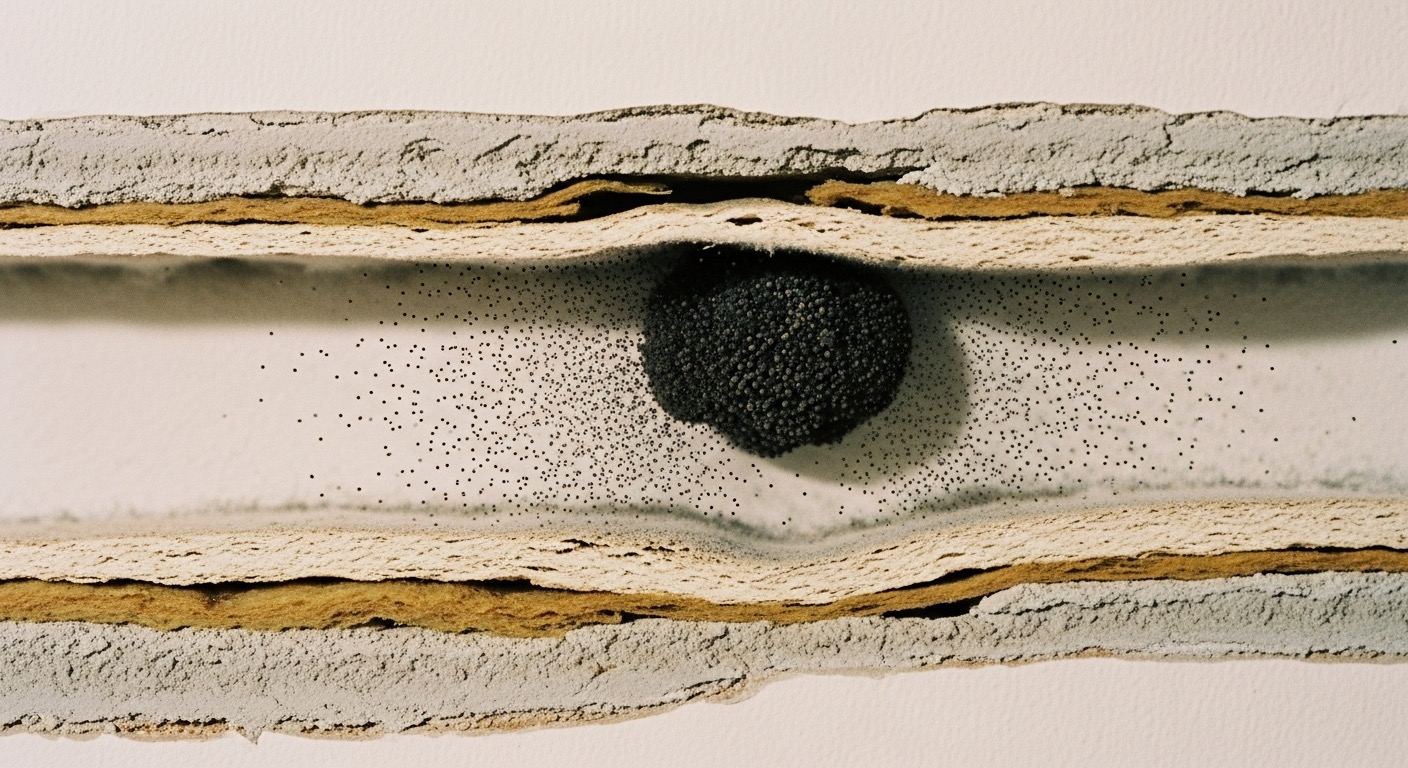
Yes. Hidden mold can contribute to indoor environmental exposure even when you can’t see the growth itself.
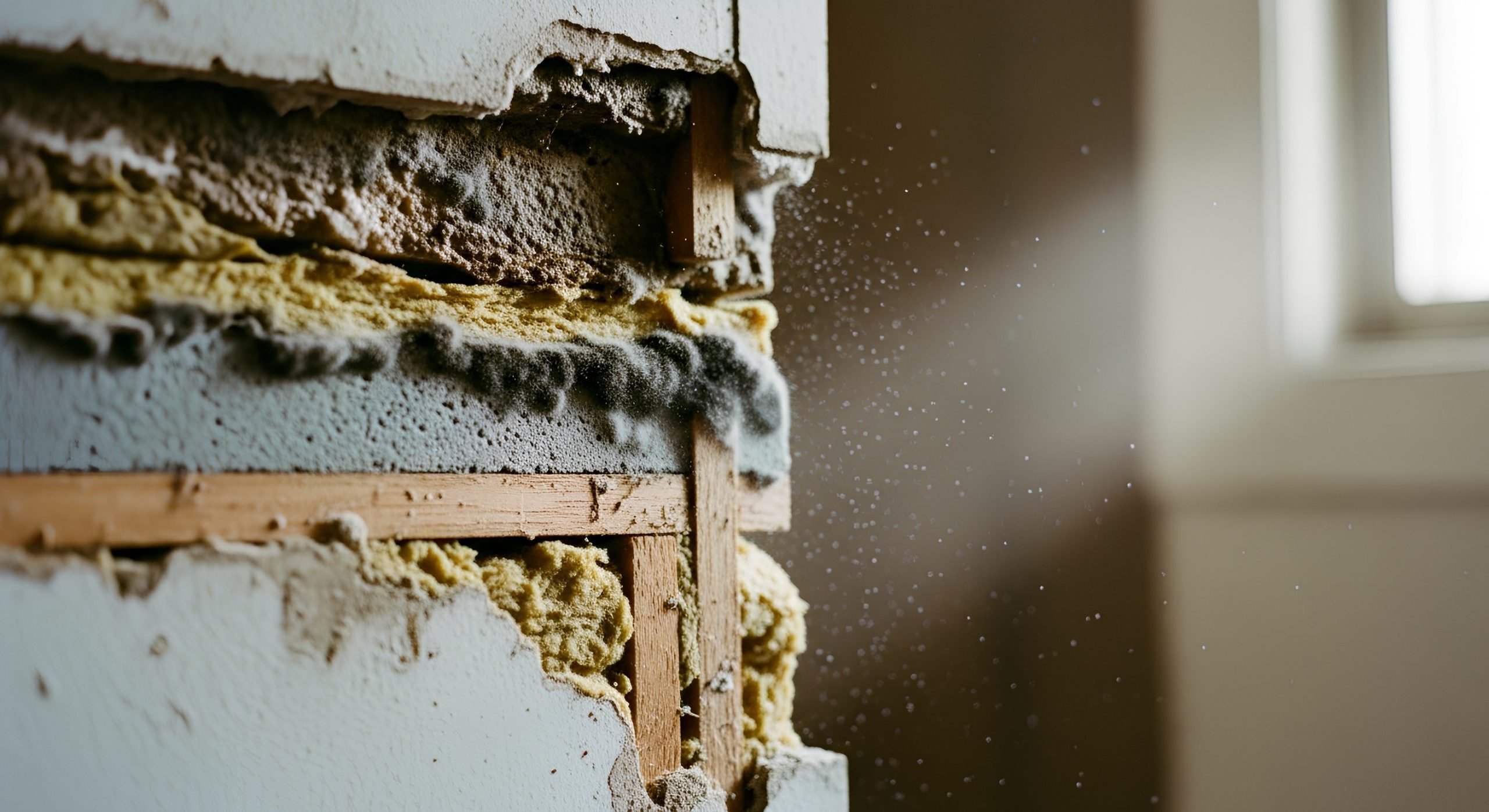
Mold doesn’t need to be growing on an exposed wall to affect the surrounding environment.
It can develop in concealed areas where moisture accumulates, including:
Behind drywall or wallpaper
Beneath flooring or carpeting
Inside wall cavities
Around plumbing leaks
In crawl spaces and basements
Around HVAC components affected by moisture
Depending on the location and conditions, particles and compounds from hidden mold growth may enter occupied spaces.
This is why a home can look perfectly clean while still having an underlying moisture or mold problem.
And it’s also why appearance alone isn’t a reliable way to evaluate the condition of your indoor environment.
A freshly painted wall doesn’t tell you what’s happening behind it.
A clean-looking bedroom doesn’t necessarily tell you whether moisture has accumulated beneath the flooring.
If you’re experiencing unexplained symptoms alongside signs of moisture damage, it’s worth looking beyond what you can immediately see.
What Should You Do If You Suspect Mold Exposure Is Contributing to Your Headaches?
If you’ve made it this far, you may be thinking, “Okay, this sounds familiar. What am I supposed to do now?”
The good news is that you don’t have to figure everything out at once.
The goal is to gather information, identify potential problems, and take practical steps toward improving your environment.
1. Pay Attention to Your Symptoms
Start by noticing when your headaches happen.
Consider keeping a simple record of:
When your headaches begin and how long they last
Where you spend time before symptoms develop
Whether symptoms improve when you’re away from home
Any other symptoms you’re experiencing
Recent water damage, leaks, or changes in your indoor environment
This information can be useful when discussing your symptoms with a healthcare professional.
It may also help you recognize patterns you hadn’t noticed before.
2. Talk With Your Healthcare Provider
Recurring headaches deserve medical attention, especially if they’re becoming more frequent, changing in severity, or interfering with your daily life.
Tell your healthcare provider if you’ve noticed a possible relationship between your symptoms and a particular indoor environment.
They can help evaluate other potential causes and determine whether additional medical assessment is appropriate.
A sudden, severe headache, particularly one accompanied by neurological symptoms, requires emergency medical evaluation.
3. Look for Signs of Moisture and Mold
Take a closer look at areas of your home where moisture problems commonly occur.
Check beneath sinks, around windows, near plumbing fixtures, and in basements or crawl spaces where accessible.
Pay attention to water stains, persistent condensation, damp materials, and musty odors.
If you discover visible mold growth, avoid disturbing it unnecessarily. Scrubbing, cutting into contaminated materials, or attempting demolition without appropriate containment can release additional particles into the surrounding environment.
4. Consider Environmental Mold Testing
If you’re concerned about mold but aren’t sure what’s happening in your home, environmental testing can provide additional information.
One option is The Dust Test, which analyzes a sample of settled household dust for DNA from 36 mold species.
Because dust can collect material from different areas of your home over time, testing it can help you better understand which mold species are present in the sampled environment.
It’s important to understand what those results mean.
A dust test doesn’t diagnose mold-related illness, measure your personal exposure, or tell you exactly where mold is growing.
Instead, it provides environmental information that can help you decide whether further investigation is warranted.
If you already know that significant mold growth or water damage is present, you don’t need to delay addressing the problem while waiting for a test.

5. Investigate the Source
If testing results, visible damage, or other environmental clues suggest a mold problem, a qualified mold inspector can help determine what’s happening.
A thorough inspection should look beyond identifying mold.
It should investigate moisture sources, affected materials, and the conditions allowing microbial growth to occur.
This is especially important because removing visible mold without correcting the underlying moisture problem can allow growth to return.
6. Address the Mold and Moisture Problem
When mold contamination is confirmed, the next step is correcting the moisture source and appropriately removing contaminated materials.
The extent of remediation depends on the location, affected materials, and severity of the problem.
Simply spraying a product over mold or attempting to cover it with paint doesn’t resolve the underlying issue.
The goal is to remove the contamination and correct the conditions that allowed it to develop.
For larger or more complicated problems, professional remediation may be appropriate.
Independent post-remediation verification can then help assess whether the remediation objectives were achieved before the area is returned to normal use.

Can Headaches Improve After Mold Remediation?
Yes, headaches may improve after a mold-damaged indoor environment is properly addressed.
As the 2004 study involving teachers in mold-damaged schools demonstrated, researchers observed meaningful reductions in reported headaches after remediation.
That doesn’t mean everyone will experience the same results.
The relationship between environmental exposure and health is complex, and headaches can have multiple contributing factors.
But reducing exposure to a problematic indoor environment may help when that environment has been contributing to symptoms.
It’s also important to remember that remediation involves more than making mold disappear from view.
The moisture source needs to be corrected, contaminated materials must be appropriately addressed, and the affected environment should be evaluated to determine whether the work was successful.
For homeowners, the goal is to create a healthier indoor environment that supports their well-being over the long term.
And even if mold turns out not to be the primary cause of your headaches, correcting moisture damage and improving indoor air quality can still benefit your home.
Your Home Shouldn’t Be an Overlooked Part of Your Health
When headaches keep returning, it’s natural to focus on what might be happening inside your body.
But your surroundings deserve attention, too.
The air you breathe, the condition of your home, and the amount of time you spend in a particular environment can all influence your daily exposure to indoor pollutants.
And research has shown that headaches are among the symptoms associated with damp, mold-affected buildings.
If you’ve been experiencing unexplained headaches, you don’t have to assume mold is responsible. But you also don’t have to dismiss the possibility that your environment may be contributing.
Start by paying attention to your symptoms, talking with your healthcare provider, and taking a closer look at your home’s condition.
If you’re unsure whether mold is present, environmental testing can help you begin gathering answers.
The Dust Test can help you better understand the mold species present in your home’s dust, giving you useful information as you consider your next steps.
Because understanding what’s happening in your home is an important part of creating an environment that better supports your health.

Frequently Asked Questions About Mold Exposure and Headaches
Can mold exposure cause daily headaches?
Mold exposure may contribute to recurring or frequent headaches, particularly in damp or mold-affected indoor environments. Research has identified associations between building dampness, mold, and headache symptoms. However, daily headaches can have many causes and should be evaluated by a healthcare professional.
How long does it take for mold exposure to cause headaches?
There isn’t an established timeline for when headaches might develop after mold exposure. Responses can vary depending on individual sensitivities, environmental conditions, and other contributing factors. Some people notice symptoms while spending time in a particular building, while others may experience more persistent concerns.
Can mold cause headaches without other symptoms?
It’s possible to experience headaches without obvious respiratory or allergy symptoms. People can respond differently to indoor environmental exposures. However, headaches alone cannot establish that mold is responsible.
Can mold in your bedroom cause headaches?
Yes, mold growing in a bedroom can contribute to indoor air contamination and may be relevant when investigating recurring headaches. Because people spend several hours sleeping in the same room, it’s worth examining moisture problems, ventilation, and potential contamination in that space.
Can mold cause headaches even if you can’t smell it?
Yes. Not all mold growth produces a noticeable odor, and mold can develop in concealed areas. The absence of a musty smell doesn’t rule out an indoor mold problem.
Will an air purifier help with mold-related headaches?
A properly selected air purifier with HEPA filtration can help capture airborne particles, including some fungal spores and fragments. However, an air purifier cannot remove mold growing on building materials or correct the moisture problem supporting that growth. Addressing the source remains essential.
How do you know if mold is causing your headaches?
There is no single symptom or environmental test that can definitively establish mold as the cause of a headache. However, patterns such as headaches worsening in a particular building, improving when you’re away, or occurring alongside moisture problems can provide useful clues. Medical evaluation and appropriate environmental investigation can help you better understand what may be contributing.
Have Questions?
A member of our team is here to help! Click on “Get Started ➤” below to book a consultation with a member of the HOMECLEANSE team. We have a few quick questions that will help us put together a roadmap to solve or prevent all of your mold problems.
Two minutes of your time could lead to better health for you and your family.
Must-Have Indoor Air Quality Tools
-

EC3 Laundry Additive
Add EC3 to every rinse cycle to rinse away mold, bacteria and musty odors from...
-
$23.00 Shop Now -
HomeCleanse Shield
Turn your HVAC into the healthiest feature of your home.
-
$2,495.00 Shop Now -
HomeCleanse Cleaning
Take your cleaning to the next level buying all the tools we use to keep...
-
Price range: $299.00 through $549.00 Shop Now -
Mold & Bacteria Contents Cleaning
Remove harmful pollutants that accumulate in the dust of your home. (Options available for renters...
-
Price range: $99.00 through $349.00 Shop Now -
EC3 Mold Solution Concentrate
Micro Balance EC3 Mold Solution Concentrate is a natural botanical that removes mold spores, bacteria,...
-
$33.00 Shop Now -
The Dust Test
Optimizing Air Quality starts with finding what’s not optimal. *Detects 36 different species of mold...
-
$299.00 Shop Now -
EuroClean 4 Gallon Hepa Vacuum
The Euroclean GD930HSP is a 4 Gallon Dry HEPA Vacuum that meets the EPA's standards...
-
$849.00 Shop Now