Mold & Your Personal Contents

by Michael Rubino // November 16

by Michael Rubino // November 16
One of the most conflicted arguments discussed in the mold industry today is what to do with belongings after remediation. Some say mold on your possessions is not a problem. Others will tell you to throw away everything in your home and start from scratch.
The truth is, no one knows for sure which things will cause you to experience symptoms and which won’t. We’ve had clients keep all of their belongings and feel absolutely fine. We’ve also had clients feel completely fine in their homes except when they sit on a couch they decided to keep after remediation. Then their symptoms flare up again. This is an industry where we continue to learn every single day- no two experiences are the same.
AAR’s belief on belongings is that “it depends!” The contents you should keep varys based on the condition they’re in and how contaminated they were in the first place. That’s difficult in itself to determine because of how expensive it would be to test each item in a home.
With all the ambiguity, we wanted to give you our opinion on steps to take to determine what to do with belongings. These are based on our personal experience after helping over 500+ families.
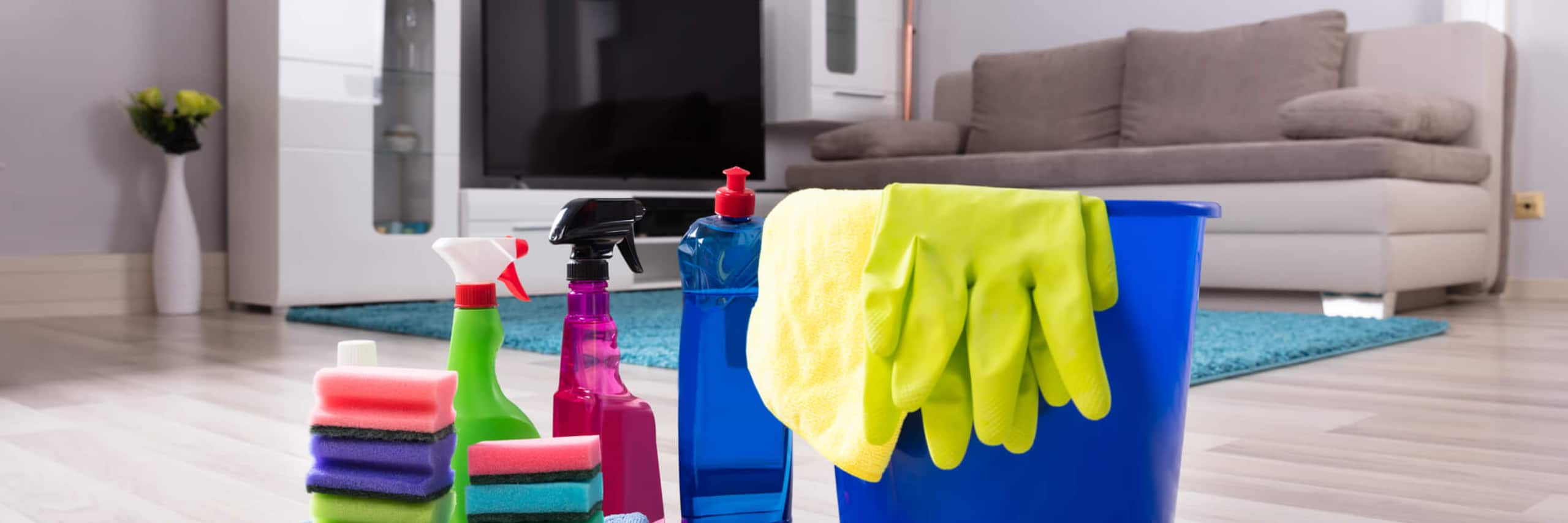
1. Identify all of the porous versus non-porous contents in a home
A good tip is to ask yourself, “ If this got we, would water pool on the surface or absorb into it?” If it will absorb in, it’s porous. Keep in mind, some are semi-porous, like wood, which makes this a little more difficult. For those, ask yourself, “If I wipe up the water, would the item remain somewhat wet?”
2. Deal with the porous items
These items can include lampshades, curtains, carpets, and clothing. These belongings are tricky to handle. Mold spores can be embedded into the fibers making them incredibly difficult to eliminate. If the item became damp at any point when the mold spore was present, it can begin to grow and colonize into the belonging. Always err on the side of caution for porous goods. We suggest these steps:
A) Discard as many porous contents as you’re willing and able to let go of so you can decrease the risk of reaction as much as possible.
B) Use EPA-approved cleaning products, like EC3 Laundry Additive for anything machine washable (it’s 99.97% effective at removing molds and mycotoxins).
C) Clean the items you can’t machine was as much as possible with items like EPA-approved cleaning products and a HEPA vacuum.
D) Re-test or re-introduce the items one by one to ensure you don’t experience any symptom relapse for that specific item.
3. Handle semi-porous belongings
These items include things like wood furniture or leather. The issue is that mold spores can partially grow into them, which makes remediation difficult. A potential option is to clean them well and seal them (for unfinished wood products) or clean them and test them.
4. Clean the non-porous items
These belongings, like metal, glass, finished wood, and sealed countertops, are the least worrisome to deal with. By vacuuming and cleaning them with approved products, they can be effectively treated for contamination.
Large-scale remediation projects, like an entire home, may require a different cleaning plan due to their size.
1. Decide what you want to keep and what you can throw away
2. Clean out and discard the items you’re tossing (you can call your sanitation company to schedule a bulk pickup or hire a service like 1-800-got-junk).
3. Take an assessment of how many of your belongings are left. If there’s quite a bit taking up space, consider storage options so that your remediation company can efficiently remediate, clean, and reconstruct your home. Here are a few options:
A) If there’s space in your driveway, consider a POD to store these items. Then on move-in day, a company can professionally remediate every item before it is moved back inside.
B) If you don’t have space, you can hire a moving company to pack up your belongings for the length of the project in a climate-controlled space. Then on move-in day have them delivered and professionally remediate your belongings as they’re moved inside.
Bringing these items back in limited quantities can help determine if you will experience an adverse health reaction when exposed to them.
A member of our team is here to help! Click on “Get Started ➤” below to book a consultation with a member of the HOMECLEANSE team. We have a few quick questions that will help us put together a roadmap to solve or prevent all of your mold problems.
Two minutes of your time could lead to better health for you and your family.