
Mold Resources
Direct Answer:
Yes, even after visible mold has been removed, microscopic particles and byproducts associated with mold can sometimes remain in the indoor environment. These can include spores, fragments, mycotoxins, and microbial compounds that have settled into dust and onto surfaces throughout the home.
Because of this, removing mold growth is an important step, but it does not always mean the environment has been fully restored. A home can look clean while still containing remnants of what was previously present. That’s why a more complete approach, one that includes detailed cleaning, environmental evaluation, and verification, is needed to truly bring the space back to a stable condition.
Let’s dive into how mold toxins should be eliminated.

Why This Can Feel So Confusing
If you’ve gone through mold remediation and expected that to be the end of the issue, you’re not alone. Most people are led to believe that once the mold is “removed,” the problem is solved.
But here’s where things can go south.
Not all remediation processes are explained in detail, and not all companies take the time to walk homeowners through how mold actually behaves inside a home. That includes how particles spread, how contamination moves beyond visible growth, and what needs to happen after remediation to fully restore the environment.
In many cases, the focus is placed on removing visible mold, but there isn’t always enough emphasis on:
- how contamination may have spread
- the importance of addressing the entire environment
- the role of HVAC systems in circulating particles
- or the need for detailed, multi-step cleaning after the work is done
So when symptoms continue, or the home still doesn’t feel quite right, it can leave people feeling confused and unsure of what was missed.
You might start asking yourself:
- Did the remediation actually work?
- Is there still something in my home?
- Why don’t I feel better yet?
These are not only valid questions but also often the starting point for real clarity.

What “Mold Toxins” Actually Means
The term “mold toxins” is often used as a catch-all phrase, but it’s helpful to break down what’s actually happening in a more clear and grounded way.
When mold grows, it releases a variety of microscopic materials into the environment.
These can include:
- Spores – reproductive particles that allow mold to spread
Fragments – tiny pieces of mold structures that break apart over time
Microbial byproducts – compounds produced during the mold’s lifecycle
One group of these byproducts that often comes up in conversation is mycotoxins. These are naturally occurring compounds produced by certain types of mold under specific conditions. While not all molds produce mycotoxins, and not all environments contain them, they are part of the broader category people are often referring to when they say “toxins.”
And their notoriety is important because these tiny toxins are naturally toxic to the human body, which is why they’re regulated in our food products. Interestingly enough, though, no regulations exist regarding mycotoxins in the home.
What’s important to understand is that these materials are microscopic.
That means they can:
travel through the air
settle into dust
collect on surfaces and belongings
move throughout the home over time
So even though you may no longer see visible mold, the environment may still reflect what was previously happening.
How Mold Spreads Through a Home
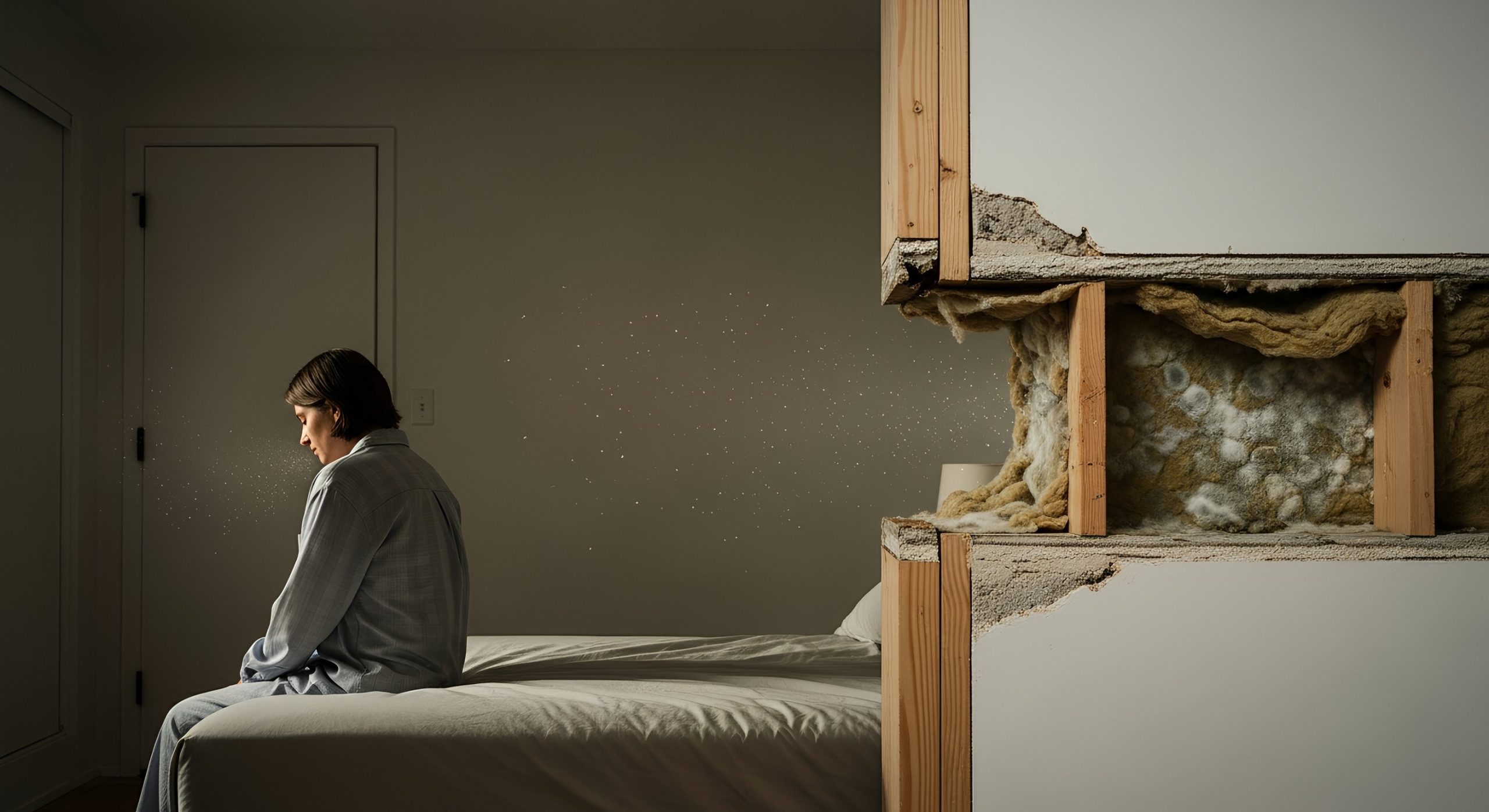
Mold growth doesn’t stay neatly contained to one area.
As it develops, particles are continuously released into the air. From there, they move with airflow throughout the home. This can happen through HVAC systems, natural air movement between rooms, and even everyday activities like walking, cleaning, or sitting on furniture.
In modern homes, which are often more tightly sealed to improve energy efficiency, these particles don’t always exit the space easily. Instead, they can linger, recirculate, and settle in new areas.
Over time, this creates a situation where the effects of mold are not limited to where it started. A localized issue can gradually influence the broader indoor environment, especially if it has been present for a while.
What Mold Leaves Behind
As particles move through the home, they begin to settle, and where they settle matters.
They can accumulate in:
dust across floors, shelves, and surfaces
HVAC systems and ductwork
carpets, rugs, and upholstered furniture
clothing, curtains, and other fabrics
areas that may not have been included in the original remediation
interstitial cavities within walls
Dust plays a particularly important role here. It acts almost like a record of what has been present in the environment over time. As particles settle and collect, they remain there until they are properly removed.
This is why a home can still feel affected even after the visible mold has been addressed.
Why Removing Mold Isn’t Always the Final Step
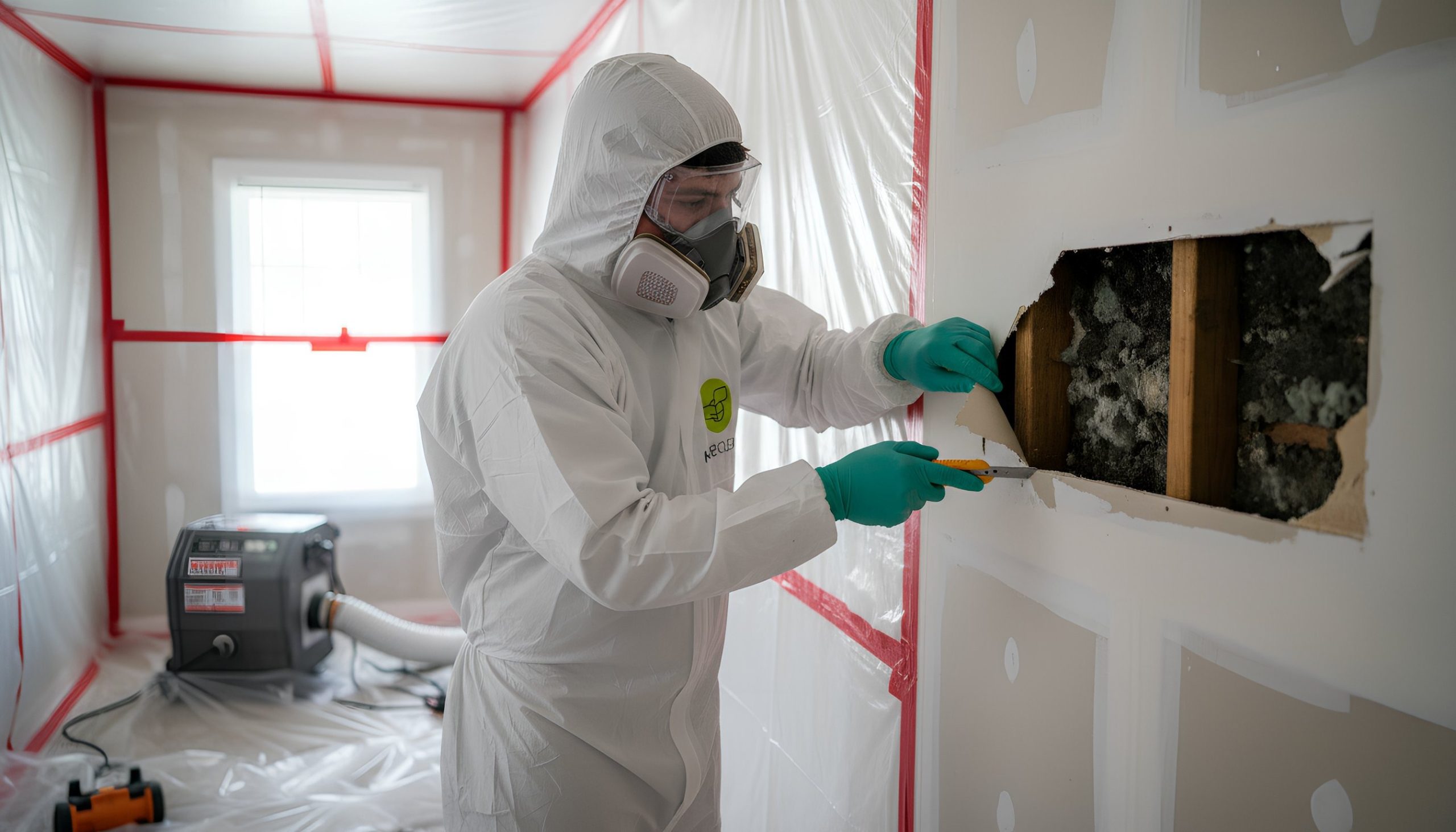
Removing visible mold addresses the source of growth, but it does not automatically reset the environment.
If the surrounding contamination hasn’t been addressed, those particles can remain in the home and continue to circulate. Every time air moves, surfaces are disturbed, or dust is shifted, those particles can become airborne again.
That means exposure doesn’t necessarily stop the moment remediation ends.
To fully restore a home, the focus needs to expand beyond just removal and include the condition of the entire indoor environment.
And, in some cases, this isn’t just about what was removed, but also how the process was carried out and what steps were included along the way.
When Remediation Doesn’t Address the Full Environment
It’s also important to understand that not all remediation approaches are designed with the full environment in mind.
In some cases, the focus may be placed primarily on treating or removing what is visibly affected, without fully accounting for how far contamination may have spread. When that happens, it can leave behind particles that continue to circulate within the home.
This doesn’t mean the work wasn’t well-intentioned. It simply means that mold remediation is complex, and the details matter.
A few areas where gaps can sometimes occur include:
Lack of containment during removal
Containment helps prevent particles from spreading to unaffected areas during the remediation process. Without it, microscopic particles can travel through the air and settle in other parts of the home.
Limited or no post-remediation cleaning
Removing mold growth is only one part of the process. If surrounding dust and settled particles aren’t addressed through detailed cleaning, they can remain behind and continue to impact the environment.

Fogging or treatment-only approaches
Some methods focus on applying products or fogging the air rather than physically removing contamination. While these approaches may play a role in certain situations, they don’t replace the need for source removal and detailed cleaning. If underlying issues aren’t addressed, the environment can still contain residual particles, and ongoing growth may continue to release new ones.
HVAC systems not being addressed
If particles have entered the HVAC system, they can continue to circulate throughout the home. Without proper evaluation, cleaning, or filtration improvements, this can reintroduce contaminants into the living space.
Incomplete scope of work
Sometimes, areas that were impacted aren’t fully identified or included in the remediation process. This can allow contamination to remain in hidden spaces and continue affecting the environment over time.
If any of these pieces were missing, it doesn’t mean all progress is lost. It simply means that additional steps, especially around cleaning, filtration, and environmental stabilization, can make a meaningful difference moving forward.
What Proper Cleaning Actually Includes
A thorough post-remediation process is not just about making the home look clean. It’s about reducing the total particle load within the space.
This often involves multiple stages of cleaning, rather than a single pass.
A more complete approach may include:
detailed HEPA vacuuming of all surfaces
wiping and cleaning of walls, floors, and horizontal surfaces
addressing dust within HVAC systems and improving filtration
cleaning or properly handling soft materials like fabrics and upholstery
repeating cleaning cycles to ensure particles are progressively reduced
In many cases, one round of cleaning isn’t enough. Because particles settle and resettle, multiple passes are often needed to truly stabilize the environment.
This is one of the biggest differences between a home that looks clean and one that actually feels clean over time.
When remediation is followed by this level of detailed cleaning and environmental support, it helps ensure that both the source and what it left behind are properly addressed.

Why Some People Still Don’t Feel Better
This is one of the most important parts to understand and one of the most emotional.
If you don’t feel better after remediation, it does not mean you’ve done something wrong. And it does not mean the situation is hopeless.
There are a few common reasons this can happen.
In some cases, residual particles are still present in the environment, meaning exposure is still occurring at a lower level. In others, certain areas may not have been fully addressed, allowing contamination to persist.
There’s also the human side of this. After spending time in an environment that was affecting you, the body doesn’t always immediately snap back. It can take time for things to settle, especially if exposure happened over weeks or months.
For many people, improvement happens gradually as the environment becomes cleaner and more stable. For others, continued symptoms are simply a signal that there are still pieces of the environment that need attention.
Either way, it’s not a dead end. It’s information.
How to Get Clarity on What’s Still Present
At this stage, the goal is not to guess. It’s to understand.
That means looking at the environment more holistically rather than focusing on one specific area.
This can include evaluating dust buildup, checking that moisture issues have truly been resolved, reviewing what steps were taken during remediation, and using tools that provide insight into what may still be present in the home.
For many homeowners, this is the turning point. Once there’s clarity, the path forward becomes much more straightforward and manageable.

Quick Environmental Check-In
If you’re wondering whether anything may still be lingering in your space, here are a few helpful things to look at:
✔ Is there visible dust buildup on surfaces or vents?
✔ Has the HVAC system been cleaned or evaluated?
✔ Are humidity levels consistently between about 35–50%?
✔ Were all affected areas included in the remediation scope?
✔ Does the home feel different depending on the room or time of day?
These small observations can often point you in the right direction.
Final Thoughts
If you’ve already taken steps to address mold in your home, that matters. It’s not a small thing. It’s a meaningful step toward improving your environment.
And if things still don’t feel quite right, it doesn’t mean you’ve failed. It usually just means there are a few remaining pieces that need to be addressed.
With the right information and a more complete approach, it’s absolutely possible to move toward a home that feels stable, clean, and supportive again.
You’re not stuck. You’re just one step closer to clarity.

Interested in Learning More?
If you’re trying to better understand what may be happening inside your home, our website is filled with resources designed to help you make informed decisions and provide you with peace of mind
Still Have Questions?
A member of our team is here to help! Click on “Get Started ➤” below to book a consultation with a member of the HOMECLEANSE team. We have a few quick questions that will help us put together a roadmap to solve or prevent all of your mold problems.
Two minutes of your time could lead to better health for you and your family.