
Mold Resources
If you’ve been researching mold remediation, you may have already noticed something confusing.
Different professionals sometimes recommend very different approaches.
One inspector might say encapsulation isn’t necessary. Another remediation company might insist it’s essential. Some professionals recommend testing, while others follow a different sequence entirely.
For homeowners who are already dealing with a stressful environmental issue and potential symptoms, this can make the process feel overwhelming.
At HomeCleanse, transparency has always been one of our core values. Since 2012, our team has worked with homeowners across the United States who are navigating some of the most complex indoor environmental conditions imaginable.
Many of the families we help are not simply dealing with visible mold growth. In many cases, they are individuals who are hypersensitive to mold exposure, managing chronic health conditions, or working alongside physicians to restore their indoor environment as part of a broader recovery process.
Because of this, the remediation system we’ve developed over the past decade is intentionally designed for a very specific type of client.
This article explains our methodology, the reasoning behind it, and how it fits within the broader mold remediation standards used across the industry.
Does the HomeCleanse Process Follow the IICRC S520 Standard?
The ANSI/IICRC S520 Standard for Professional Mold Remediation is one of the most widely recognized guidelines used in the restoration industry.
Within this standard, it is recommended that Post-Remediation Verification (PRV) be performed before the application of an encapsulant.
This recommendation exists for a practical reason.
The S520 is designed to guide a wide range of remediation contractors, from small local companies to large restoration firms managing insurance-based projects. Performing verification before applying a coating allows an inspector to confirm that cleaning was successful before any surface treatments are added.
It is a logical approach for many remediation workflows, and we respect the reasoning behind it.
However, HomeCleanse intentionally follows a different sequence of operations for very specific reasons related to the population we serve.
The S520 itself acknowledges that remediation contractors must exercise professional judgment based on project conditions, which allows for alternative methodologies when appropriate.
Why HomeCleanse Does Not Pause for PRV Before Encapsulation
HomeCleanse operates as a national traveling remediation team, working with medically sensitive clients throughout the country.
In many of these projects, homeowners temporarily relocate while remediation is being completed.
This relocation can involve coordinating hotels, moving pets, adjusting work schedules, and sometimes traveling long distances while the home environment is restored.
For a family staying in temporary housing, even a short delay in the remediation process can quickly turn into thousands of dollars in additional costs.
If a project pauses mid-process while waiting for PRV testing results, laboratory analysis may take several days. That delay can extend the remediation timeline significantly.
Because of this reality, HomeCleanse designed a remediation system that allows work to continue while still maintaining strict verification and accountability.
Instead of stopping for verification before encapsulation, our process focuses on extensive mechanical cleaning and multiple cleaning cycles designed to remove contamination far beyond minimum industry recommendations.
The HomeCleanse 78-Step Operational Procedure
At the core of our methodology is one of the most important principles in mold remediation:
Contamination must be physically removed, not simply treated.
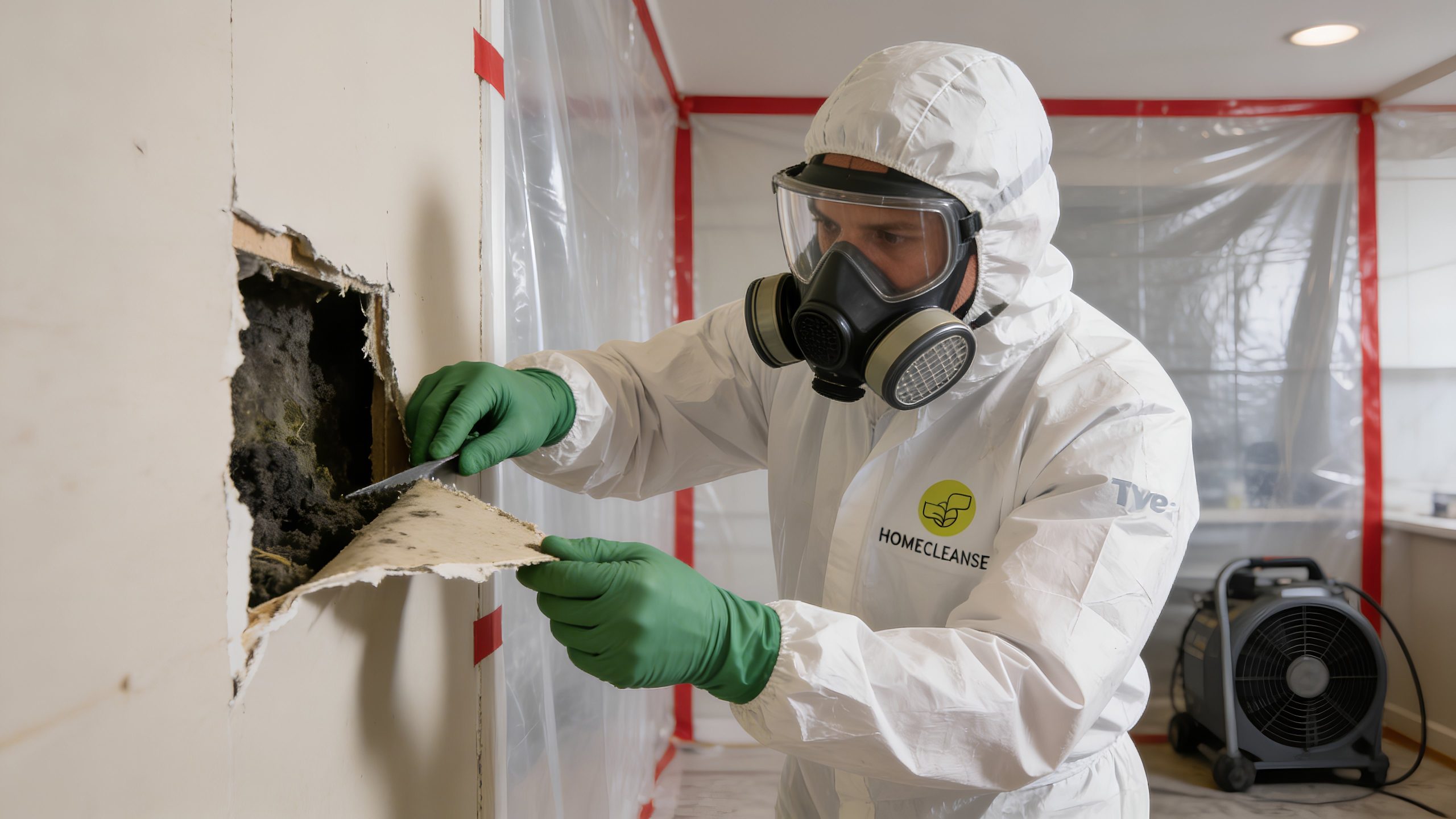
Our remediation protocol includes a 78-step process designed to thoroughly clean affected environments before stabilization steps are introduced.
Each remediation area undergoes multiple cleaning cycles that include:
Mechanical Removal
Contamination is physically removed using techniques such as light surface sanding, micro abrasion, and other mechanical cleaning methods, all while under extraction and collection with HEPA-filtered vacuums.
Hydrogen Peroxide + Surfactant Application
A hydrogen peroxide-based solution is applied to help clean, prepare, and reveal areas where organic contamination may still be present. When microbial proteins remain on a surface, the solution can produce visible bubbling, helping technicians identify areas that may require additional cleaning.
HEPA Vacuuming
High-efficiency particulate air (HEPA) filtration removes microscopic particles and microbial fragments from surfaces after they have been cleaned with hydrogen peroxide solution.
Benefect Decon 30 Application
A botanical disinfectant is applied, in accordance with the recommendations of the manufacturer, as part of the decontamination process.
Second HEPA Vacuuming
Surfaces are vacuumed again to remove particles loosened during treatment.
Controlled Drying Period
Materials are allowed to dry (to a regionally acceptable moisture reading) under controlled conditions to prevent moisture retention and trapping.
Application of an Antimicrobial Encapsulant
After our extensive cleaning is complete and all surfaces are dried in accordance with industry-specific regional guidelines, an antimicrobial encapsulant is applied to stabilize surfaces and provide an additional protective layer.
This multi-stage cleaning approach helps ensure contamination has been addressed thoroughly before the final stabilization step is introduced.
Encapsulants vs. Sealants: Why the Difference Matters
One of the most common points of confusion in mold remediation comes down to terminology.
Encapsulants and sealants are often used interchangeably in conversation, but from a building science perspective, they are not the same.
The key difference lies in permeability.
Sealants are typically non-permeable. They create a barrier that does not allow water vapor to pass through. While this may seem protective, it can create unintended consequences in a remediation environment. When moisture becomes trapped behind a non-breathable coating, it can lead to increased humidity at the substrate level, potential bond failure, and, over time, renewed microbial activity beneath the surface.
Encapsulants, on the other hand, are designed to be semi-permeable, or “diffusion open.” This means they allow water vapor to pass through while still stabilizing the surface. Many professional-grade encapsulants also include antimicrobial properties to help prevent future colonization on treated materials.
This distinction is critical because remediation is not just about covering a surface. It is about restoring balance within the building assembly.
“Why Some Coatings Pass… Then Fail Later”
In some cases, coatings may appear successful immediately after application.
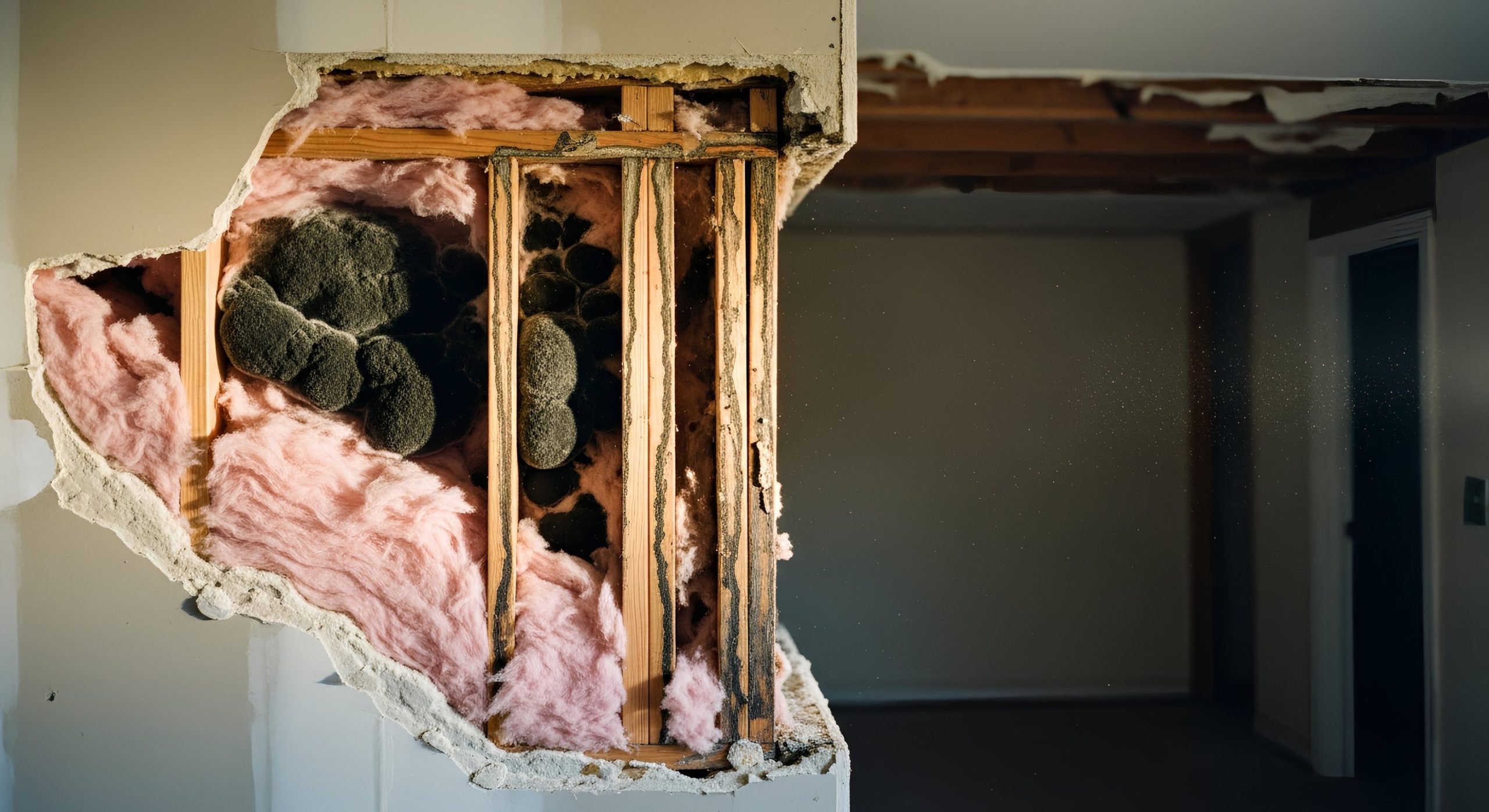
They may pass initial inspection methods such as tape lift testing, and the surface may look clean and uniform. However, if the coating is not vapor-permeable, it can trap moisture within the material.
Over time, this can create pressure at the substrate level, leading to blistering, peeling, or breakdown of the coating. When that happens, previously contained particles can be released back into the environment, potentially resulting in a failed post-remediation verification (PRV) or a return of symptoms.
This is why HomeCleanse does not rely on coatings as a shortcut.
Encapsulation is only introduced after extensive mechanical cleaning has already been completed. It is not used to hide contamination, but to stabilize materials after they have been properly addressed.
In some cases, improper encapsulation or coating selection can lead to immediate PRV failure, which is why both product selection and application methodology are critical to long-term success.
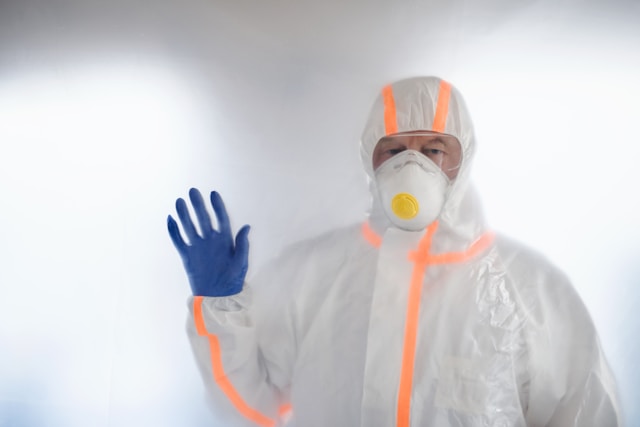
What Makes the HomeCleanse Approach Different
Most remediation companies focus primarily on removing visible mold growth.
HomeCleanse approaches remediation as an environmental restoration process.
Our projects are designed to:
remove contamination through extensive mechanical cleaning
address microscopic particles and microbial fragments
stabilize building materials after cleaning
support the needs of medically sensitive individuals
This methodology, known as The Mold Method, has been refined over more than a decade and has involved collaboration with numerous environmental professionals, hygienists, and building science experts.
Many homeowners who contact HomeCleanse have previously attempted traditional remediation approaches without achieving the results they needed.
For medically sensitive individuals, the difference between a home being considered “clean enough” and being safe enough to live in can be life-changing.
We are proud to say that thousands of families have successfully returned to their homes after remediation using our approach.

Verification and Accountability
Even though our workflow uses a different sequence than the S520 recommendation, verification remains a critical part of every HomeCleanse project.
Each project includes:
Independent third-party post-remediation verification
Testing performed by a hygienist chosen by the client
A background of consistent successful PRV outcomes across thousands of projects since 2012
A 10-year warranty against mold recurrence
To our knowledge, HomeCleanse is currently the only remediation company offering a 10-year warranty on mold remediation work.
In addition to verification testing, we document every stage of the project so homeowners can clearly see what was done inside their home.
Clients receive:
Photo documentation of remediation milestones
Condition documentation before encapsulation
Daily progress updates
Access to a secure online customer portal
Our goal is simple: complete transparency and measurable results.

Frequently Asked Questions
My IEP says this violates the IICRC S520 standard.
The S520 recommends performing PRV before encapsulation, but it does not prohibit alternative remediation methodologies.
The standard specifically acknowledges that remediation contractors must exercise professional judgment based on the conditions of each project.
HomeCleanse operates transparently, documents every step of the process, and supports the work with independent verification and a 10-year warranty.
Our approach does not reduce accountability.
If anything, it increases it.
My IEP says encapsulation isn’t necessary.
Encapsulation is an important part of the HomeCleanse warranty system.
While mold growth always requires moisture, environmental conditions such as:
humidity spikes
condensation
vapor migration
localized microclimates within building assemblies
…can sometimes allow microbial growth to return.
Encapsulation provides several practical benefits:
creating a more moisture-resistant surface
reducing surface porosity in building materials
stabilizing substrates after cleaning
making future remediation easier if a leak occurs
Removing encapsulation from the scope of work would also remove the 10-year warranty associated with the HomeCleanse system.
My IEP says fixing the leak is all that’s needed.
Correcting the moisture source is absolutely essential. Without addressing moisture, mold will continue to return.
However, moisture sources are not always obvious leaks.
Mold growth can also occur due to:
condensation
elevated indoor humidity
thermal bridging
vapor driving through building materials
Addressing moisture is the first step.
Ensuring the affected building materials are thoroughly cleaned and stabilized is what helps homeowners move forward with confidence.
My IEP says encapsulation doesn’t work.
You may have seen demonstrations where mold appears to grow through coatings.
In many of those situations, the issue is not the concept of encapsulation itself, but how the coating was applied.
Common problems include:
standard latex paint used instead of antimicrobial encapsulants
coatings applied over contaminated surfaces
insufficient cleaning prior to application
Encapsulation is not a substitute for proper remediation.
It is intended to be the final protective layer after thorough cleaning has already been completed. Think of it as a top coat on nails or a ceramic coating on cars.
When used correctly, it can be an effective safeguard.
My IEP says encapsulants are toxic.
This concern often comes from experiences with older solvent-based coatings or industrial sealers.
Modern antimicrobial encapsulants used in professional remediation are designed for indoor environments and are typically applied after the cleaning process is complete.
HomeCleanse also works with many chemically sensitive clients, so product safety and potential off-gassing are carefully considered when selecting remediation materials.
In our experience, the greatest health improvement typically comes from removing microbial contamination first, which is exactly what the 78-step cleaning process is designed to accomplish.
Our Commitment
HomeCleanse exists for one reason: helping people safely return to their homes.
We respect the inspectors, hygienists, and remediation professionals working throughout this industry. Differences in methodology do not have to create conflict, though. In many cases, they simply reflect different project conditions and client needs.
For more than a decade, the results of The Mold Method have spoken for themselves.
Thousands of families have returned home.
Thousands of independent tests have passed.
And we continue to stand behind our work with one of the strongest guarantees in the industry.
If you have questions about our process, we welcome the conversation.
Because when it comes to indoor environments, transparency and collaboration help everyone breathe a little easier.
Interested in Learning More?
If you’re trying to better understand what may be happening inside your home, our website is filled with resources designed to help you make informed decisions and provide you with peace of mind.
Still Have Questions?
A member of our team is here to help! Click on “Get Started ➤” below to book a consultation with a member of the HOMECLEANSE team. We have a few quick questions that will help us put together a roadmap to solve or prevent all of your mold problems.
Two minutes of your time could lead to better health for you and your family.