
Before You Go
Get Your FREE Home Cleaning Guide
Simple action items on how to make your home safer- today!

Mold keeps coming back after remediation when the underlying conditions that allowed it to grow were not fully resolved. Most often, this means moisture is still present, hidden sources were missed, or the cleanup did not fully address the contamination left behind.
Mold is not just a surface issue. It’s an environmental one.
If the environment hasn’t changed, the outcome usually won’t either.
Mold comes back when moisture or sources weren’t fully resolved
Surface cleanup alone isn’t enough
Long-term success = moisture + contamination + stability

Let’s just say this part out loud:
This is incredibly frustrating.
You did the right thing. You invested time, money, and energy into fixing the problem.
You expected relief… and instead, it feels like you’re right back where you started.
If mold has come back after remediation, it doesn’t mean your home is “broken.” It usually means something important was missed or not fully addressed.
And that’s something we can work through.
One of the biggest misconceptions about mold is this:
If you remove what you can see, the problem is solved.
But mold doesn’t work like that.
What’s visible is often just a small part of a much bigger picture. Mold can exist:
behind walls
inside insulation
under flooring
within HVAC systems
in crawlspaces, attics, and hidden cavities
And more importantly, mold is a byproduct of conditions, not the root problem itself.
That’s the real shift:
Mold isn’t the problem. The environment is.

This is the most common reason.
Mold needs moisture to grow. In fact, some species can grow in as little as 24-48 hours if moisture is present!
If any of the following are still present, regrowth can happen:
slow or hidden leaks
elevated humidity
poor ventilation
condensation issues
crawlspace or basement dampness
roof or window intrusion
Even small, ongoing moisture can recreate the same conditions that allowed mold to grow in the first place.
Not all mold is easy to find.
You might have addressed one area… while another source remained untouched nearby or elsewhere in the home.
This is especially common when:
the inspection was limited
only obvious areas were evaluated
testing was relied on more than a full investigation
If mold comes back quickly, it’s often a clue that something else is still there.

Sometimes remediation focuses only on what’s visibly affected.
But contamination doesn’t stay neatly contained.
Particles can move through the air, settle in adjacent areas, and spread beyond the original source.
If the plan didn’t match the full extent of the issue, parts of the problem may have been left behind.
Certain materials don’t clean easily once they’ve been impacted:
drywall
insulation
carpet
ceiling tiles
some types of wood
Mold can grow into these materials, not just on them. In some cases, removal isn’t aggressive. It’s necessary.
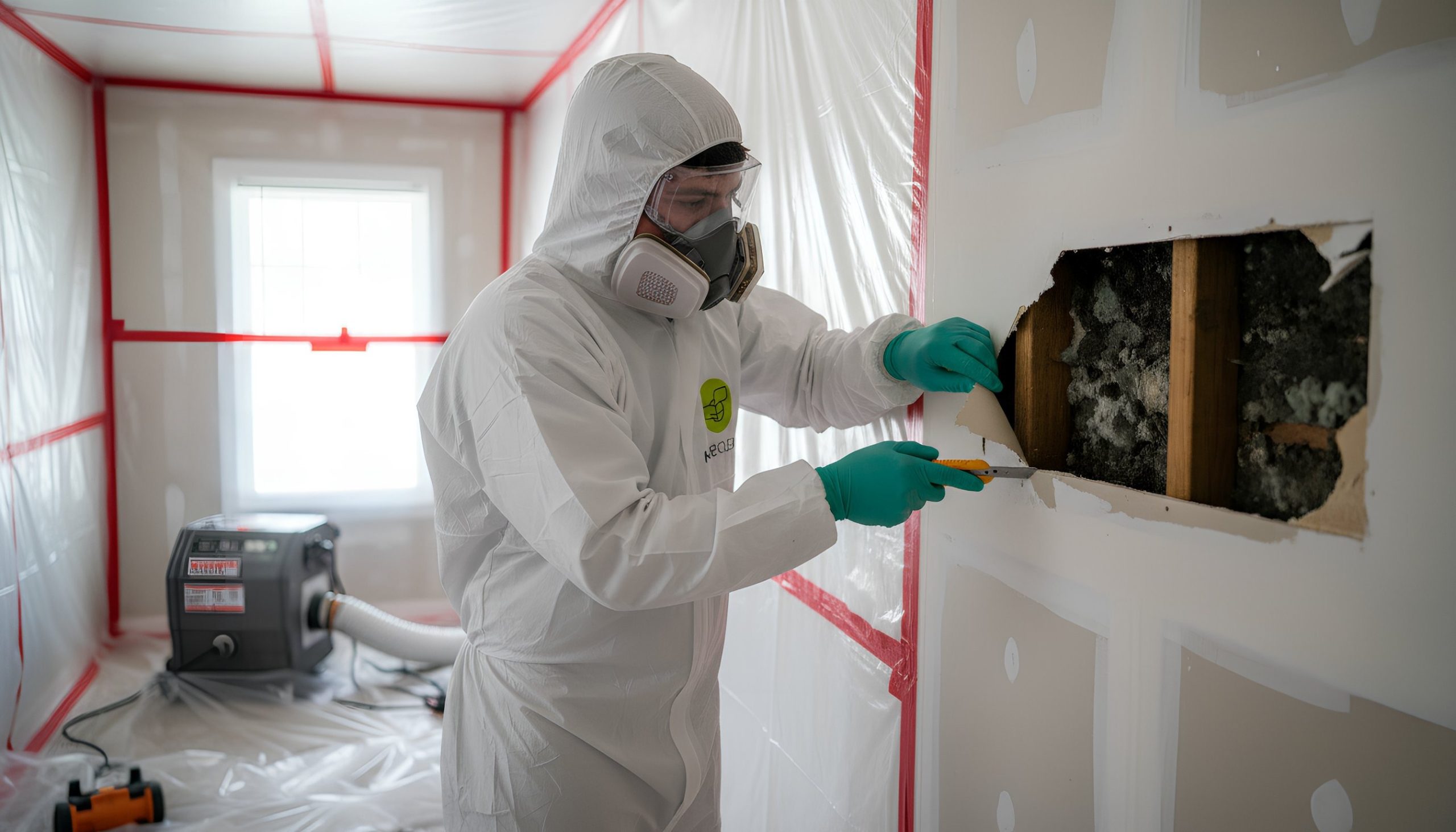
This can include:
painting or sealing over mold
relying on fogging alone
surface wiping without deeper cleaning
These approaches may improve how things look temporarily, but they don’t eliminate the underlying issue.
And when the conditions are still right, mold can return.
A successful remediation should answer:
What are we fixing?
How will we fix it?
How do we know it worked?
If there was no clear clearance process or no explanation of what “normal” looks like afterward, it can be hard to know if the problem was actually resolved.
Even after proper removal, the home still needs to stay in a stable range.
That includes:
controlled humidity (typically ~35–50%)
proper airflow and ventilation
moisture management long-term
Mold prevention isn’t about perfection. It’s about consistency.

If you’re unsure what you’re dealing with, here are some common patterns:
the musty smell comes back
symptoms improve outside the home, then return inside
mold reappears in the same area
new areas start showing signs
moisture issues were never clearly explained
the scope felt smaller than the actual problem
Your instincts matter here.
If something still feels off, there’s usually a reason.
Let’s simplify this into a path forward.
Before anything else, pause here.
Ask yourself:
What originally caused the mold?
Was that source fully fixed… or just temporarily addressed?
Has anything changed in the home since?
Because if moisture is still present, even subtly, mold isn’t “coming back”… it’s continuing.
Everything else depends on this step.

Once moisture is handled, the next step is clarity.
Look at:
What was identified during the inspection
What was actually addressed during remediation
If those two don’t fully match, that’s usually where the issue lives.
And if symptoms or musty odors are still lingering, it can also mean:
Another source was missed
The original source wasn’t fully resolved
Or contamination is still present in the environment
This isn’t about blame. It’s about finding the missing piece.
Real resolution isn’t just “removing mold.”
It’s a three-part system:
Fixing the source (moisture)
Removing contamination (not just what’s visible)
Stabilizing the environment so it doesn’t return
If one of those is missing, the cycle continues.
Use this as a simple gut check:
Was the moisture source clearly identified and fixed?
Did the plan fully explain the scope of work?
Were all impacted materials properly handled?
Was there a clear way to verify success afterward?
Has the environment been kept stable since?
If any of those feel unclear, that’s not a failure. It just means you were never given the full picture.

When mold comes back, it can feel defeating.
But in most cases, it means:
The problem was more complex than it first appeared
The environment wasn’t fully stabilized
Or the solution didn’t match the situation
And while that’s frustrating… It’s also fixable.
Because mold doesn’t come back randomly. It follows conditions.
This is where most remediation approaches fall short and why the problem keeps repeating.
This is exactly why HomeCleanse built its process differently.
Instead of focusing only on removal, the approach is designed to:
Identify and resolve the root cause
Address contamination at an environmental level
And most importantly, stabilize the home so the problem doesn’t return
That’s also why HomeCleanse stands behind the work with a 10-year warranty and a money-back guarantee if the treated area doesn’t return to a normal indoor environment.
That guarantee exists because the process is built to address the full system, not just the surface.
When the environment is properly corrected and stabilized, the outcome becomes predictable.
Learn how the full process works → The Mold Method
Still trying to understand what’s in your environment → The Dust Test
Or, if you just want clarity on your specific situation, starting with a conversation can help map out the next right step without pressure.

You don’t have to figure this out on your own.
If something doesn’t feel resolved, or you’re not getting clear answers, it’s worth talking it through.
A complimentary consultation with our team can help you:
No pressure. Just clarity.
A member of our team is here to help! Click on “Get Started ➤” below to book a consultation with a member of the HOMECLEANSE team. We have a few quick questions that will help us put together a roadmap to solve or prevent all of your mold problems.
Two minutes of your time could lead to better health for you and your family.
Yes. Mold can return if moisture is still present, hidden sources were missed, or the cleanup did not fully address the contamination.
It depends on conditions. If moisture remains, mold can begin to regrow quickly, sometimes within weeks.
Not always in a simple way. It usually means something important was not fully addressed, most often moisture or hidden sources.
No. Fogging may play a role in cleanup, but it does not replace source removal and moisture correction.
Start by reviewing moisture, scope, and whether hidden sources may still be present. From there, getting expert guidance can help clarify what was missed.
If you’re trying to better understand what may be happening inside your home, our website is filled with resources designed to help you make informed decisions and provide you with peace of mind